
Through interaction with multiple touchpoints, my teammate and I designed an information system that supports community-based mental wellness and sustainability.
Project Timeline:
12 weeks; September–December 2024
Research Methods Employed
User Interviews
Usability Testing
User Journey Mapping
Preference Testing
Think-Aloud Protocol
A/B Testing
SWOT
Market Research
Roles Played
UX research
Speculative design
Brand design
Interaction design
Service design
Information architecture
Team collaboration
Artifacts Designed
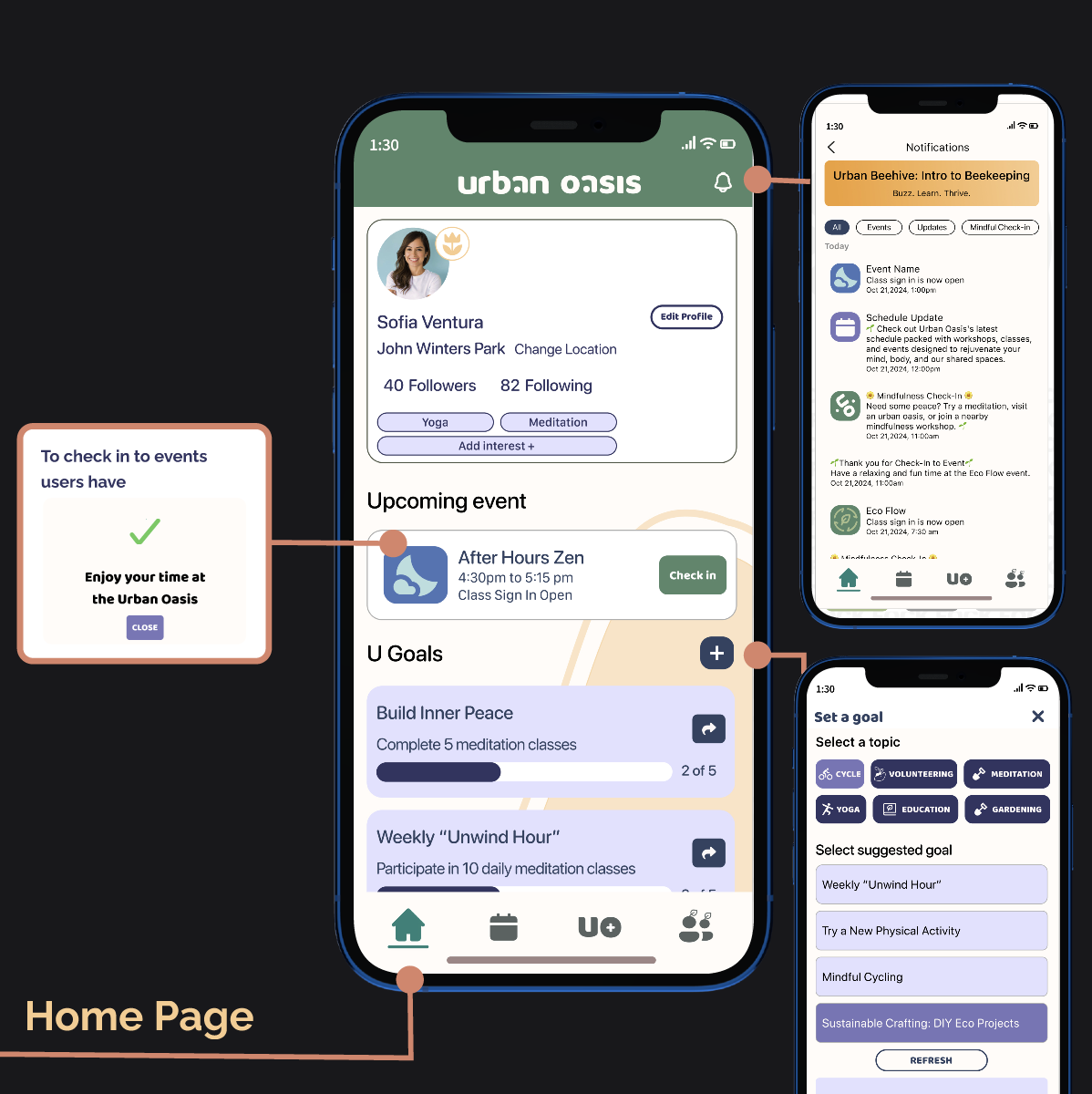
High-fidelity app
High-fidelity website
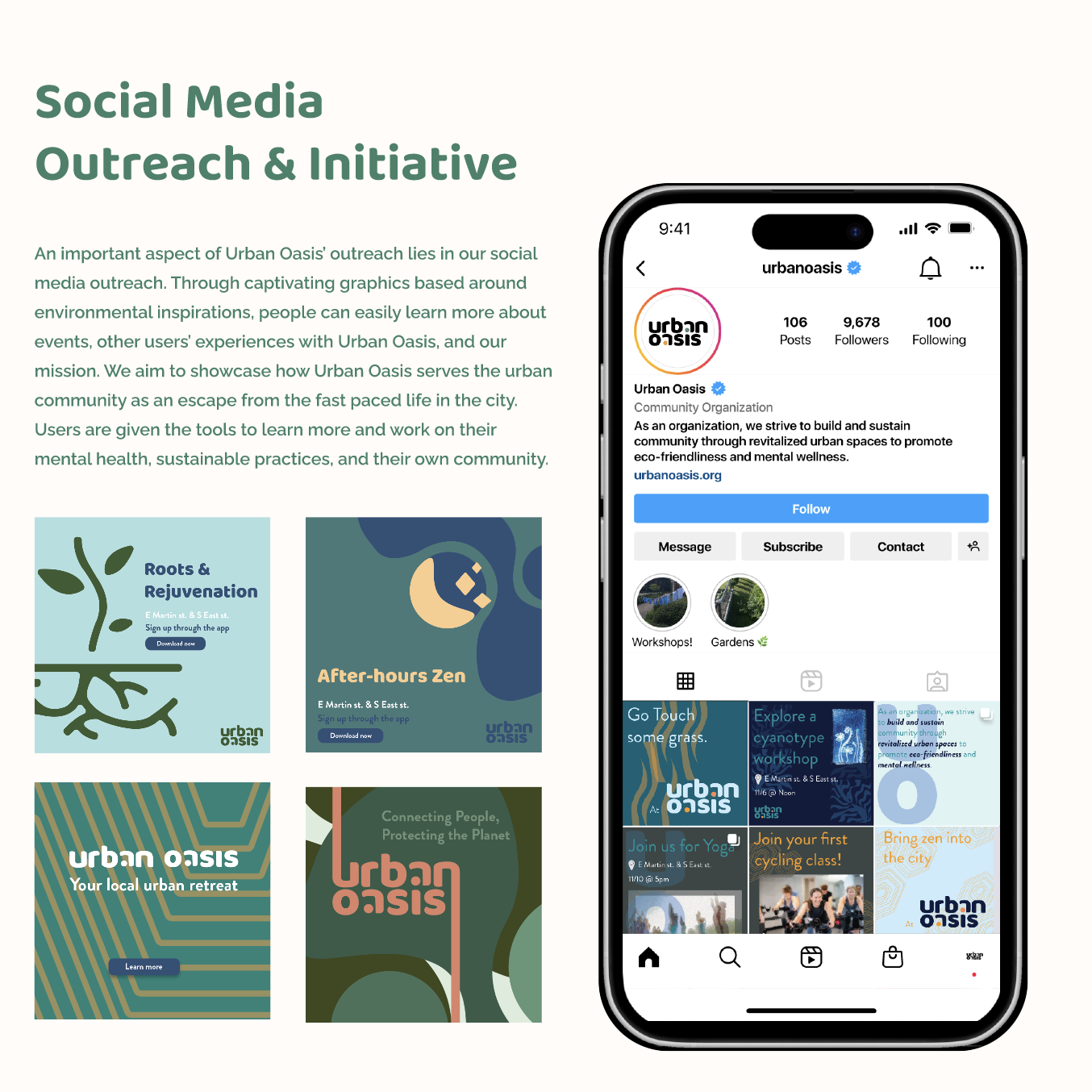
A marketing campaign
A brand identity
Prototypes of designs
My Partner created
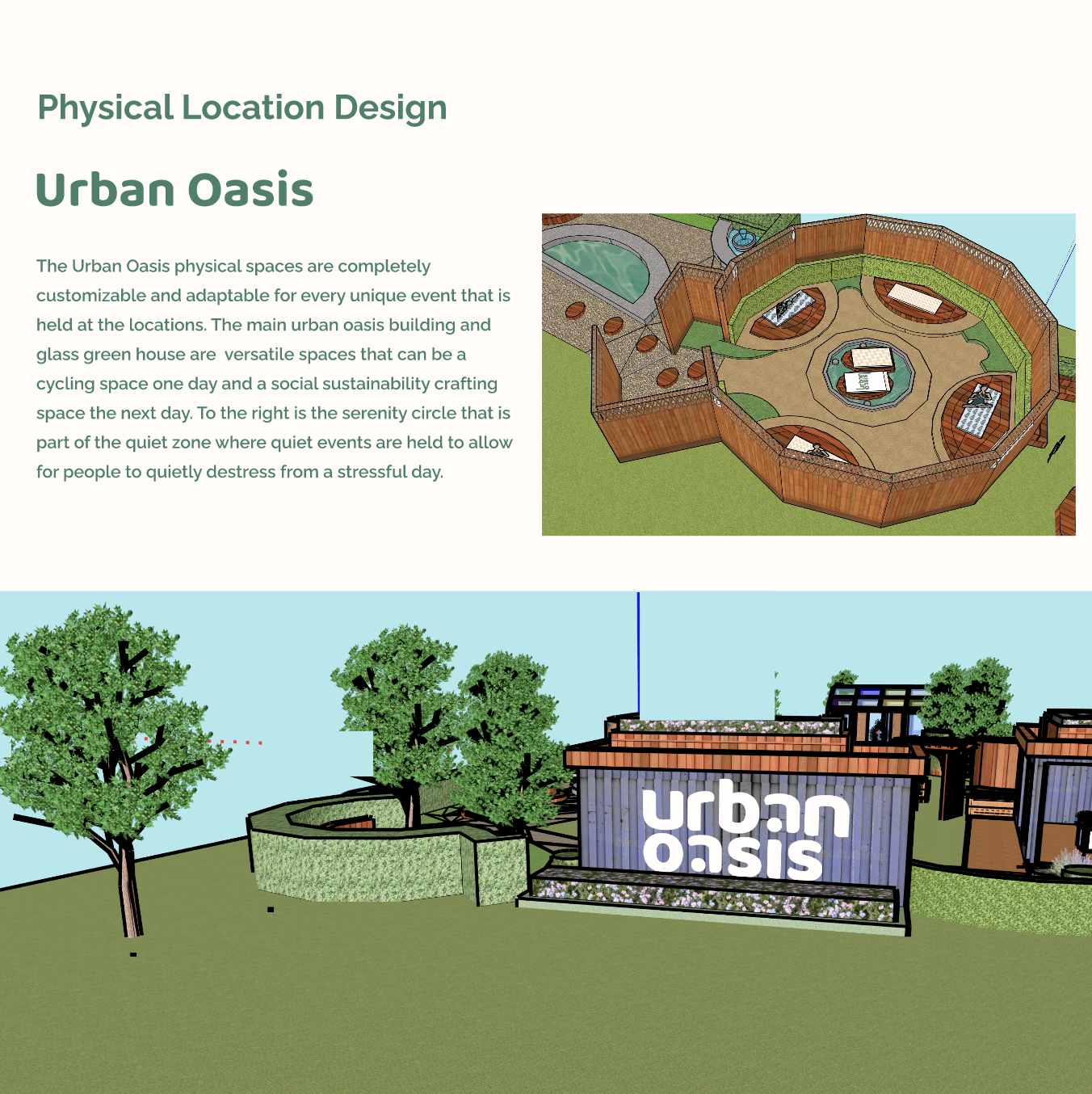
a SketchUp design of the physical space
1. Exploratory Research:
Defining the Problem Space and Design Touchpoints
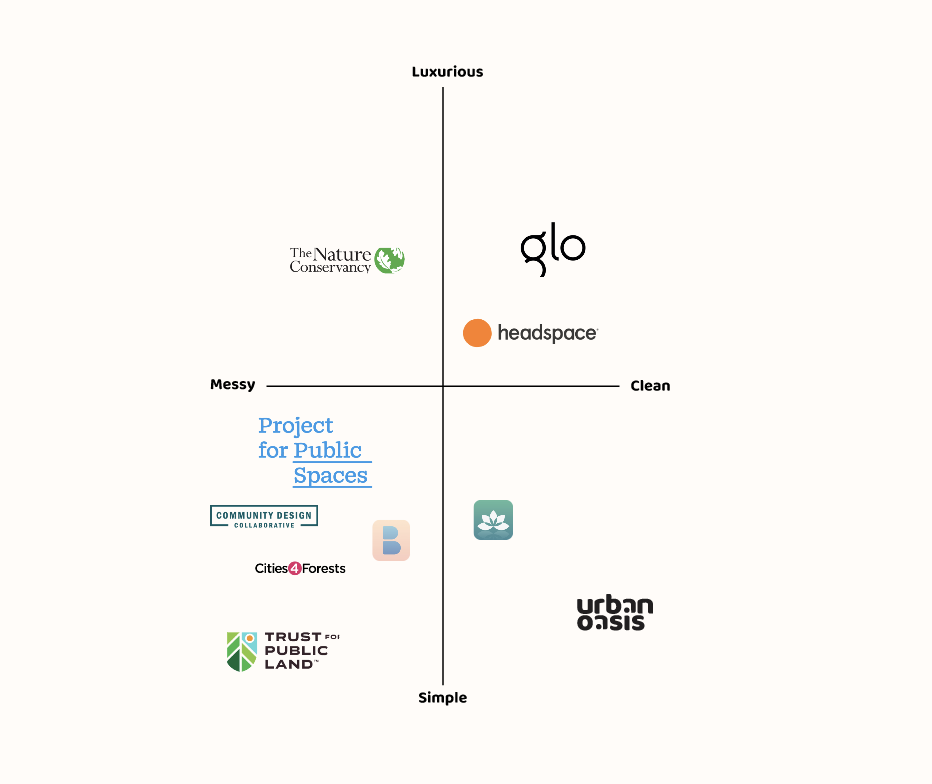
By utilizing research strategies, such as SWOT, competitive analysis, and the Kano method, my teammate and I identified mental wellness as a condition that warrants support. My initial research indicated that community resources were underutilized.
Therefore, to address this problem, I sought to improve the design of materials in ways that draw attention and encourage continual use. Through our design system, I aimed to equip individuals with information that helps them assess and shift their living habits to strengthen their mental health.
2. Secondary Research: Identifying Pinchpoints and Conducting Competitive Analysis
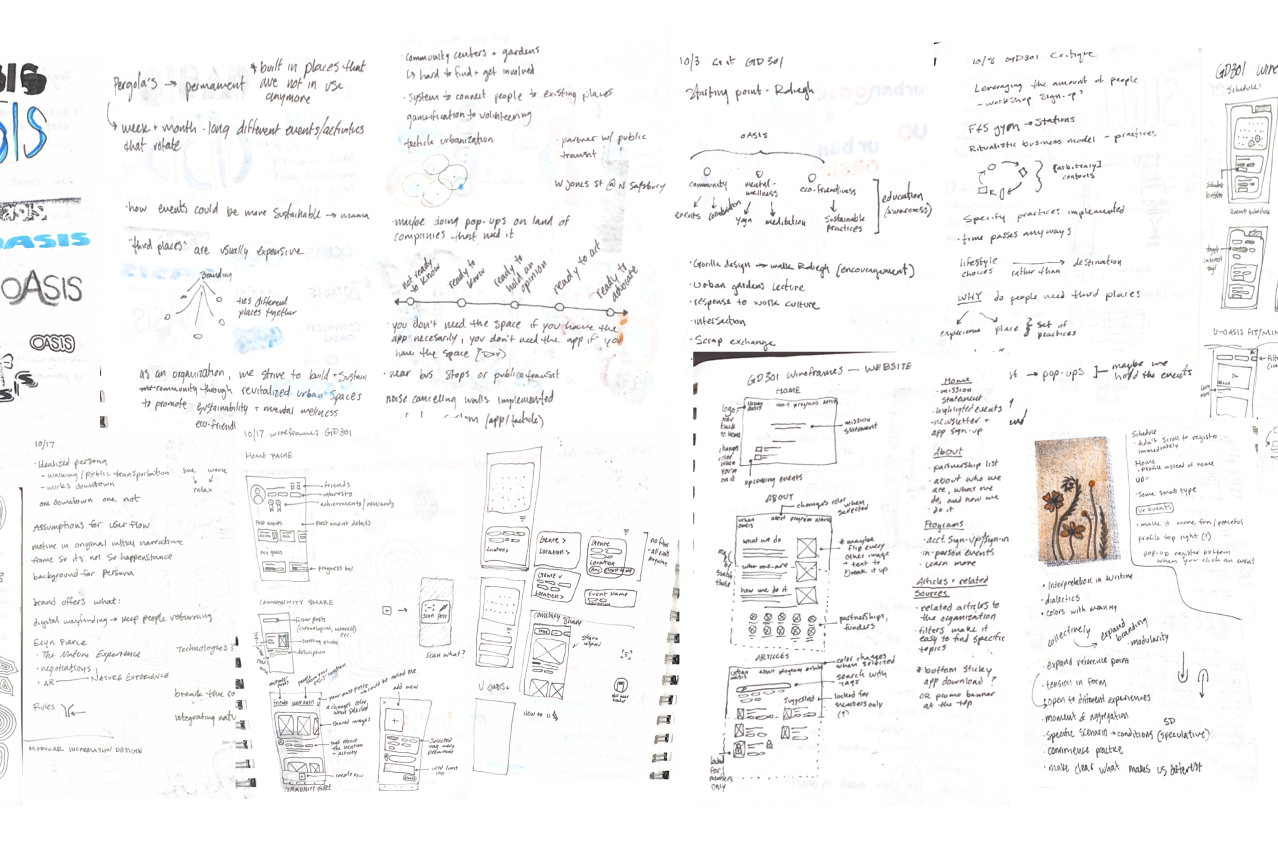
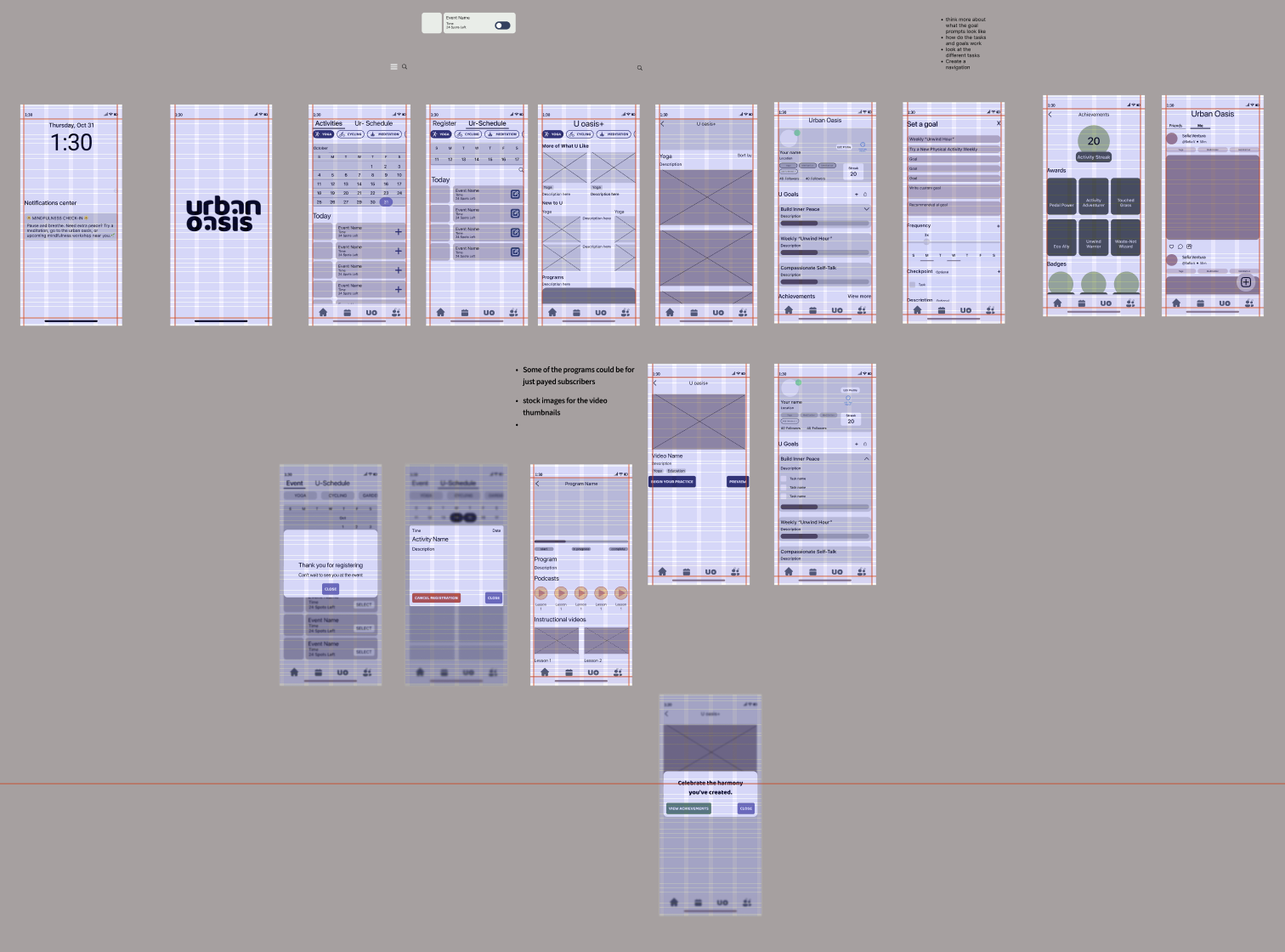
To identify pinchpoints that people encounter when accessing mental health resources, I examined various psychological research articles and the intersection of our main themes. This work provided insights that highlighted the importance of community building that lives in harmony with the environment. I used these discoveries to frame the core values of the project and inform my design direction, which focuses on bolstering community engagement while fostering sustainability efforts.
3. Generative Research:
Developing Personas, Establishing a User Journey Map, and Creating a User Story with Specific Touchpoints
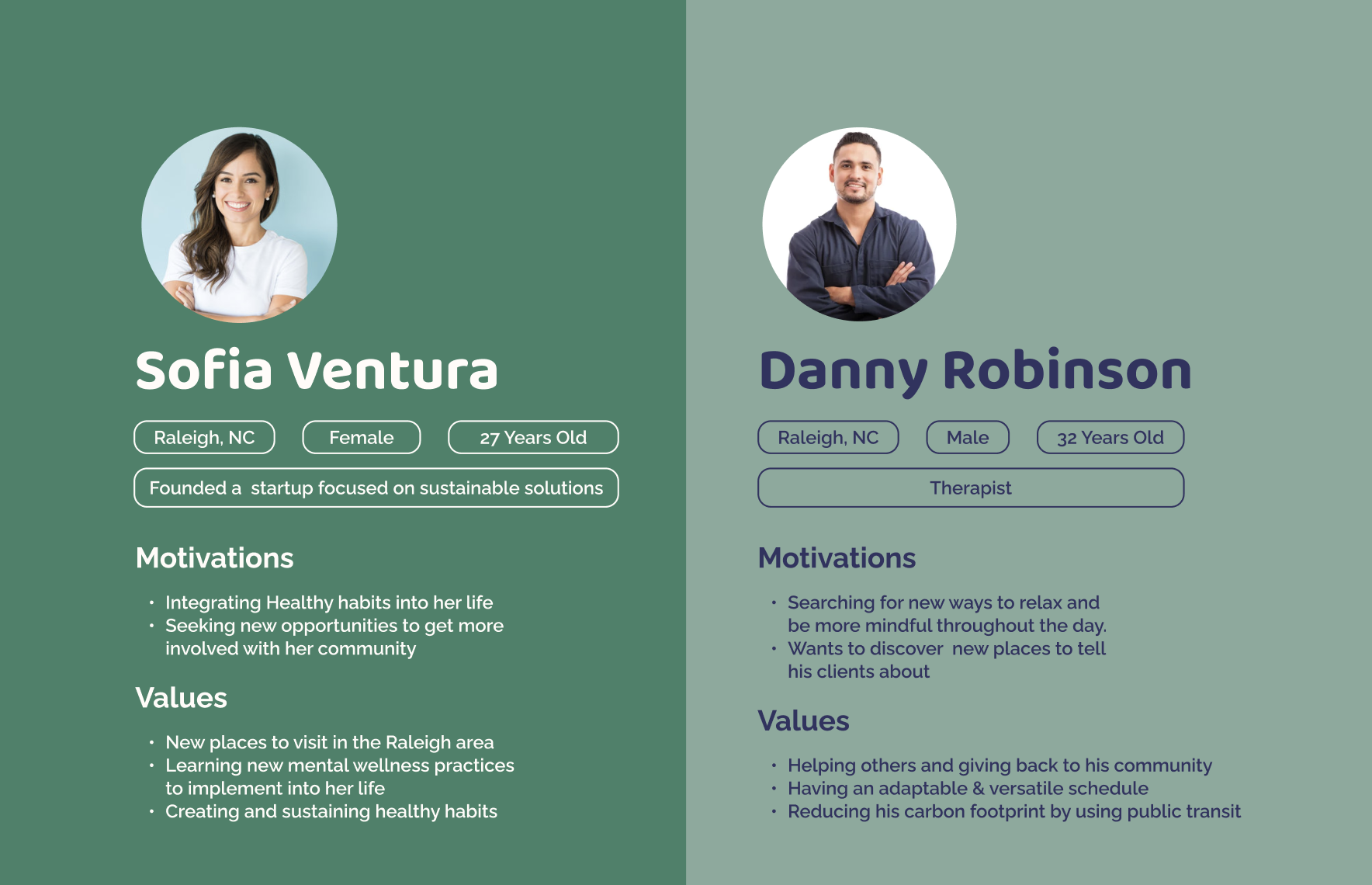
To better understand my audience’s wants, needs, values, and expectations, I developed personas that reflected a range of users.
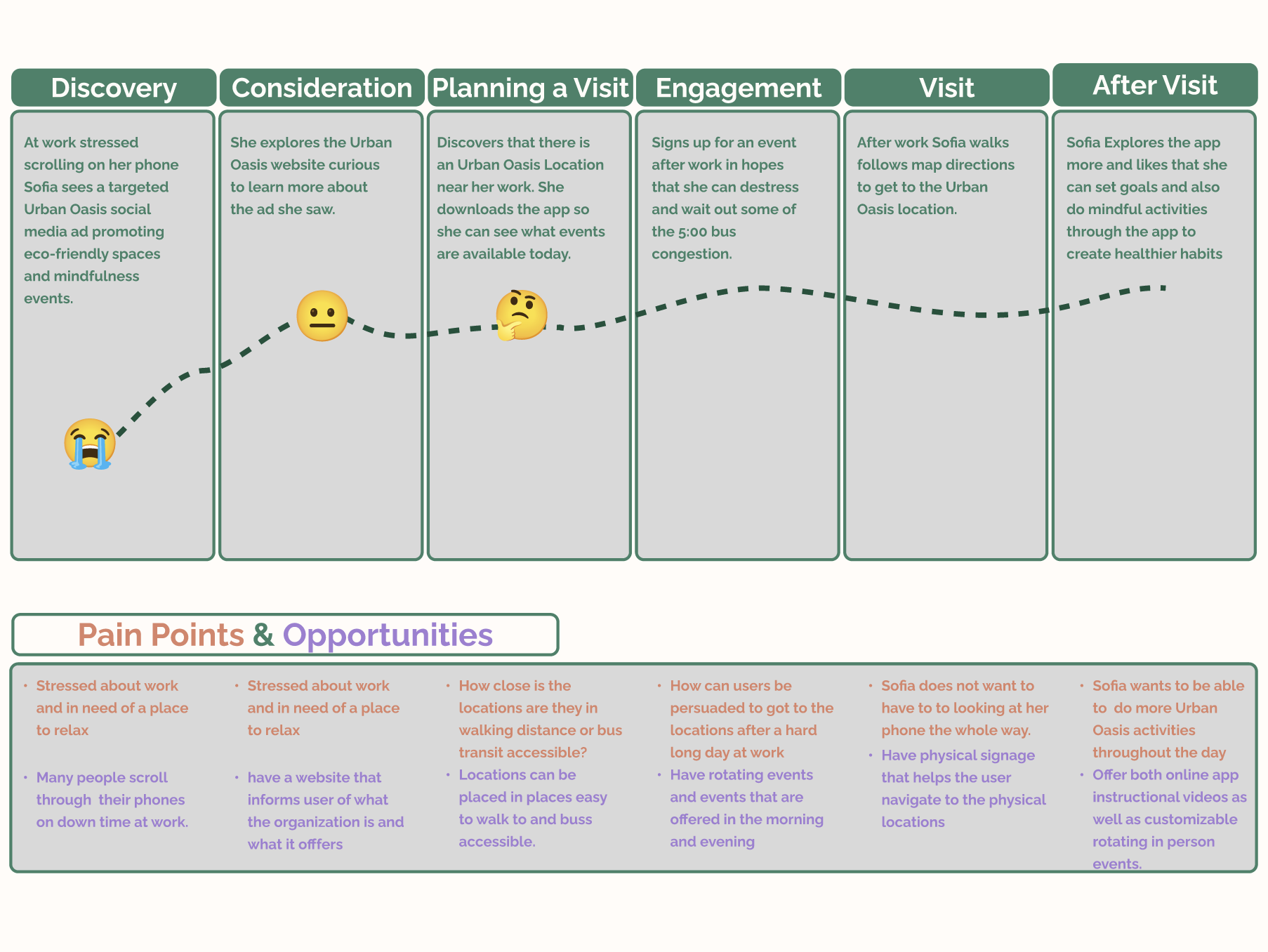
This process helped me create a human-centered journey map that accounted for variations in users’ interests.
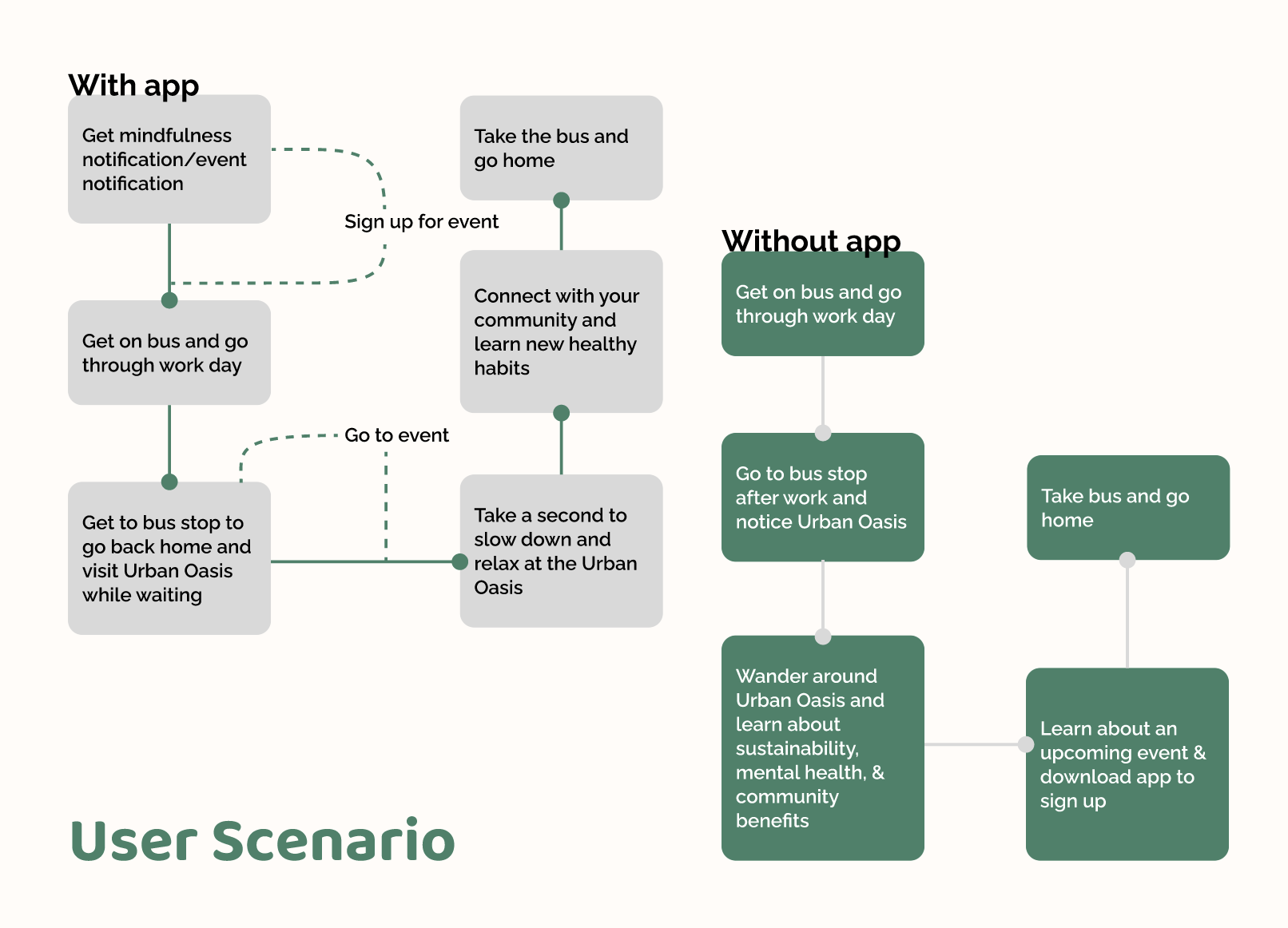
Additionally, I developed a user story with specific touchpoints to determine ways of framing the content that is perceived as authentic.
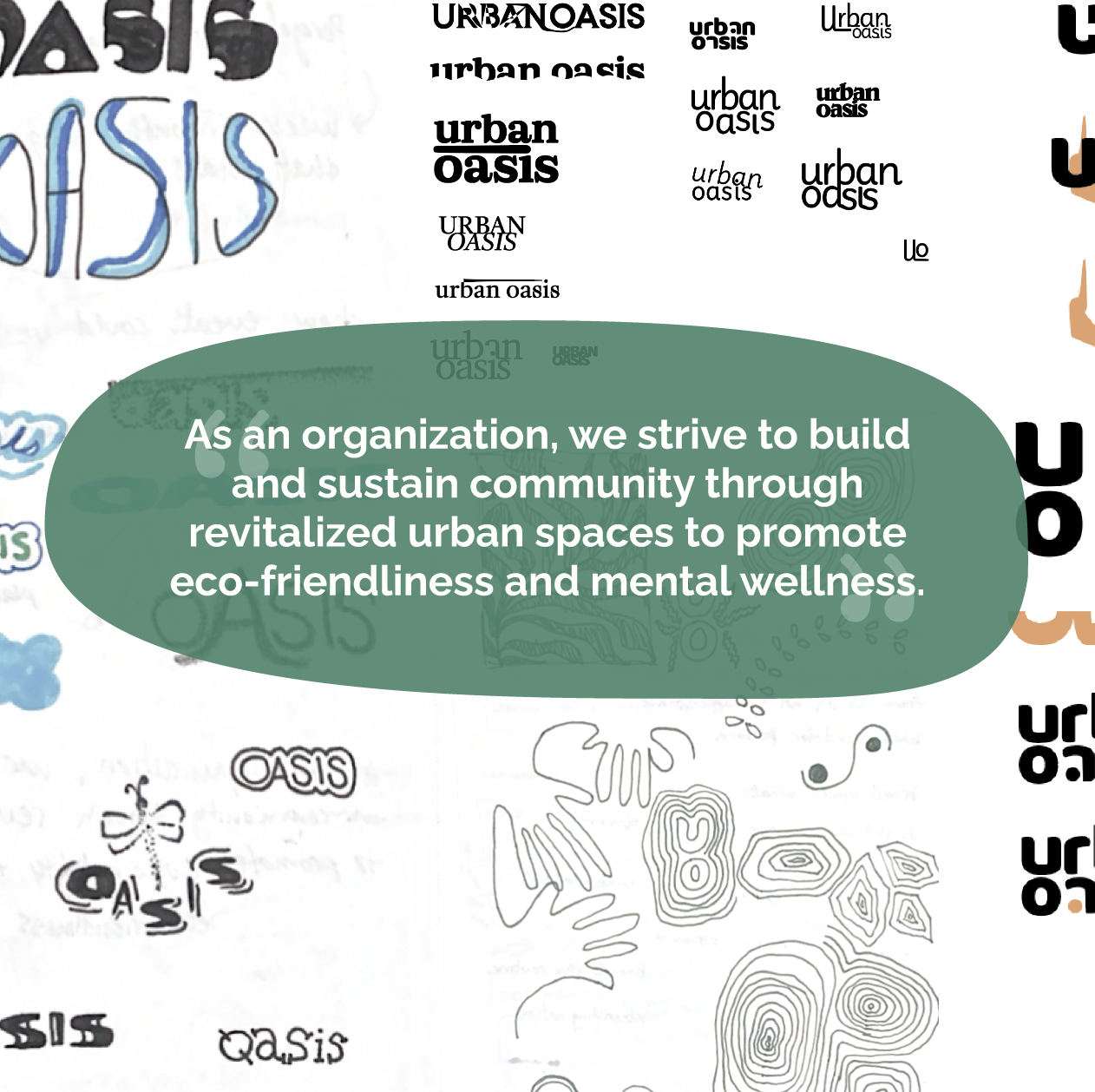
Throughout these steps, I continually aligned my work to our project mission statement, “As an organization, we strive to build and sustain community through eco-friendly small spaces located in urban green spaces to promote sustainability and mental wellness.”
4. Protoyping:
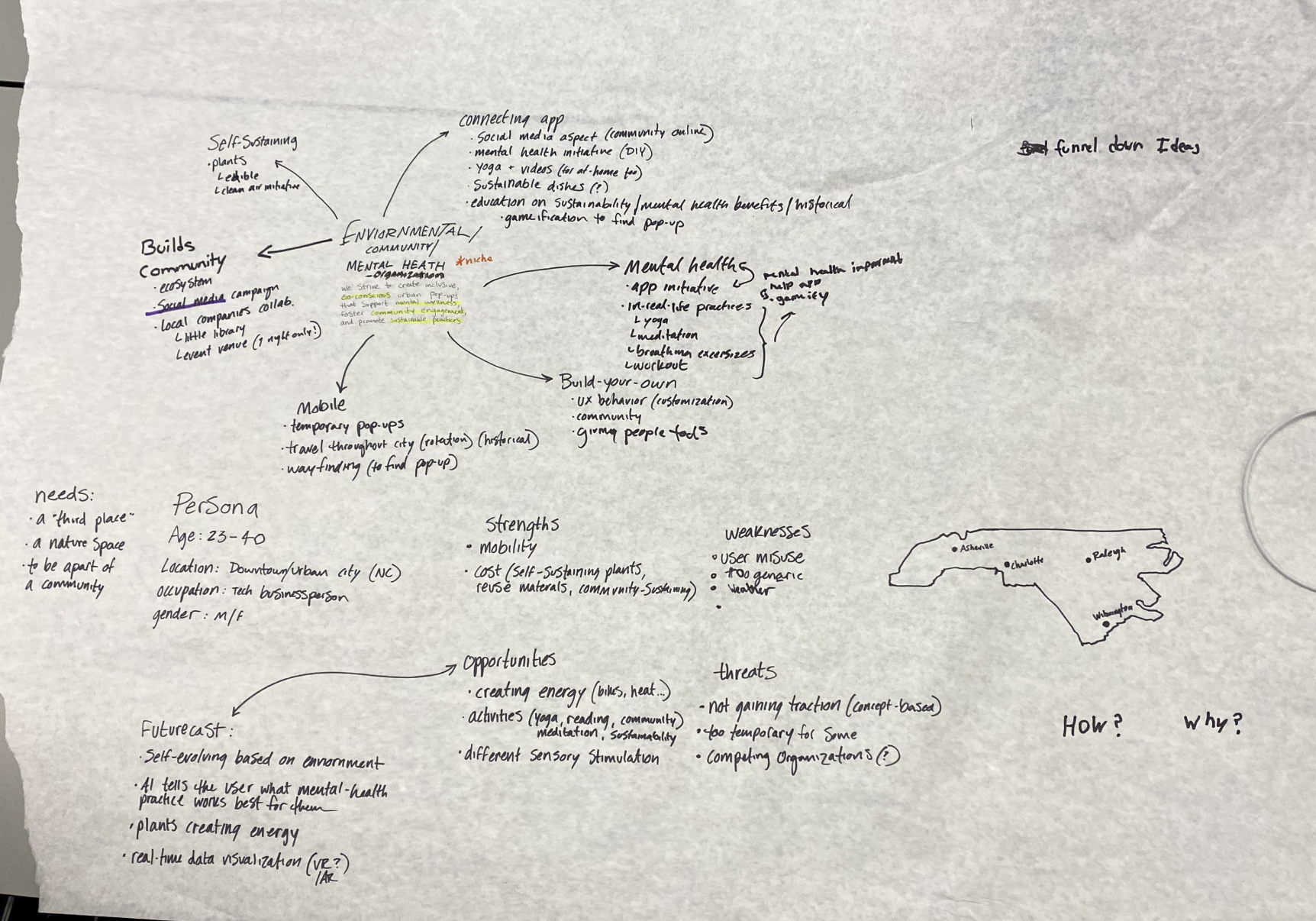
Creating Low- and Mid-Fidelity Wireframes and Mock-ups of Physical Space
I defined physical and digital touchpoints, such as spaces, apps, and websites, informed by research on user interaction and engagement. This comprehensive research approach ensured that the design system was grounded in real user needs, strategic branding, and informed service features.
5. Evaluative Research:
Analyzing and Synthesizing Insights
Throughout the evaluative research process, I surveyed users, asking them questions that would help us understand the effectiveness of our approach. I also prepared A/B testing and conducted usability testing to assess our design concepts.
These activities further informed our design approach and guided our iterative process, strengthening the effectiveness of our project.
6. Completion:
Refining Design Artifacts
The final step of the project included designing and printing a physical booklet that described our design process and highlighted our final design system. I designed the visuals and storytelling in the booklet, which explained our step-by-step process over the course of the semester.
Potential Outcomes
Given its robust system structure, this project has the potential to:
Provide useful, bite-sized pieces of information to people at various touchpoints.
Strengthen community engagement by providing residents access to a reliable network of wellness and sustainability events within their city.
Increase recognition and trust through brand awareness that is established by the design of a cohesive visual identity and digital presence.
Foster behavior change by motivating users to begin incorporating mindfulness and sustainable practices into their daily lives through the app’s goal-setting and educational features.
Challenges Tackled
This project was ambiguous in its framing. Therefore, I utilized initial insights to establish parameters for the project, which proved to be useful references when the direction of the project could have increased in scope or veered off-target.
Learnings
Through engagement in this project, I improved my understanding of designing information systems and learned how to connect components seamlessly to tell a unified story. The steps I took also strengthened my problem-solving and collaboration skills.
Next Steps
As a next step, I’d like to create VR walkthroughs of the Urban Oasis physical spaces, demonstrating how branding and environmental design converge in real life.
Read more about my process here
 Siena Rohrbach