
Through extensive research, the creation of user personas, psychological insights, and an iterative design approach, I, in collaboration with two teammates, designed and developed a prototype for an AI-powered financial wellness companion. Geared towards young adults, ‘Orbit’ offers adaptive tools for learning about financial matters and setting clear goals.
Project Timeline:
12 weeks; September–December 2024
Research Methods Employed
User Interviews
Usability Testing
User Journey Mapping
Preference Testing
Think-Aloud Protocol
A/B Testing
SWOT
Market Research
5-second testing
Roles Played
User behavior researcher
Gamification strategist
Journey mapping
Wireframing
Context-aware psychological researcher
Team Leader
Scenario video script writer
Artifacts Designed
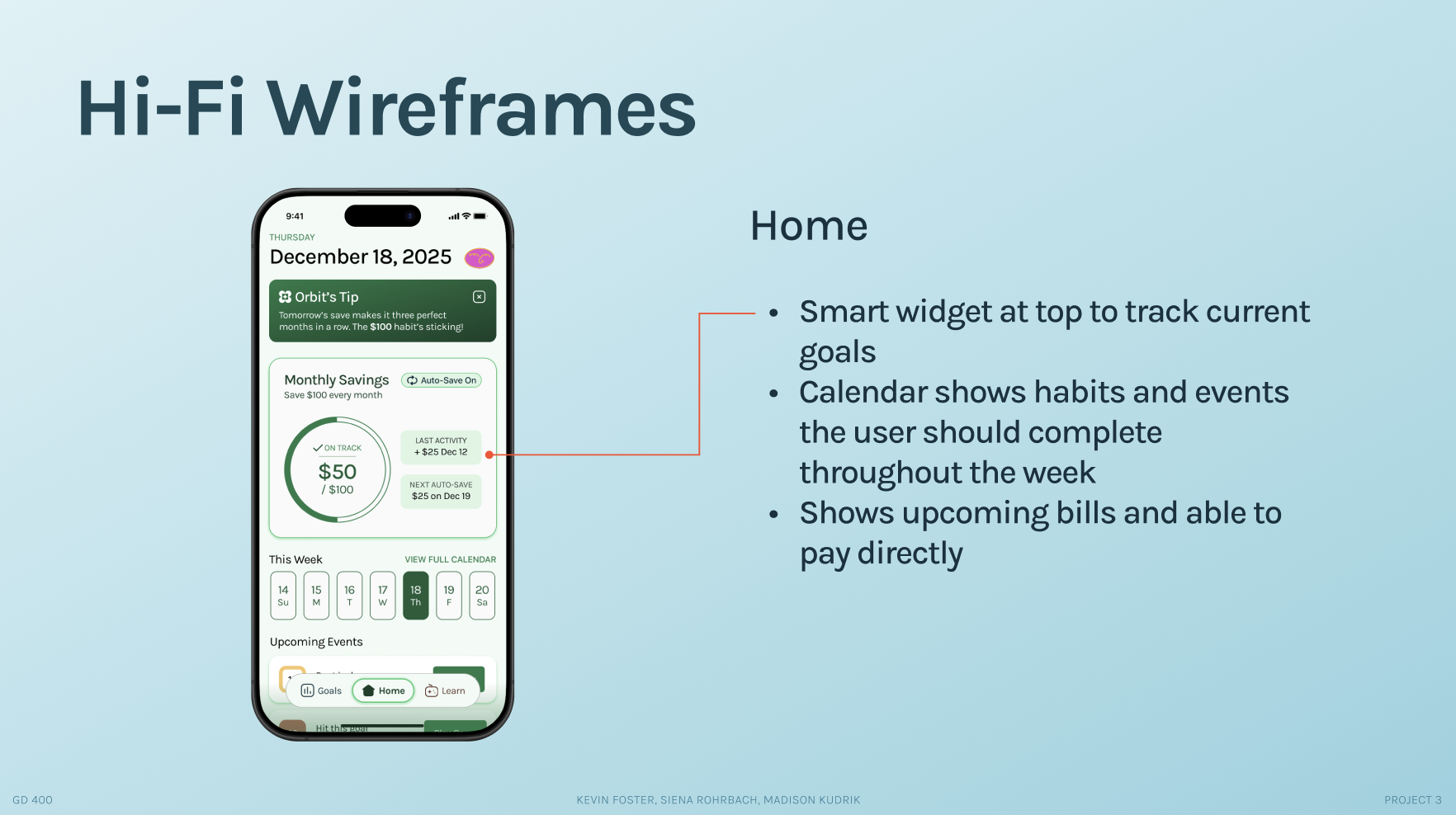
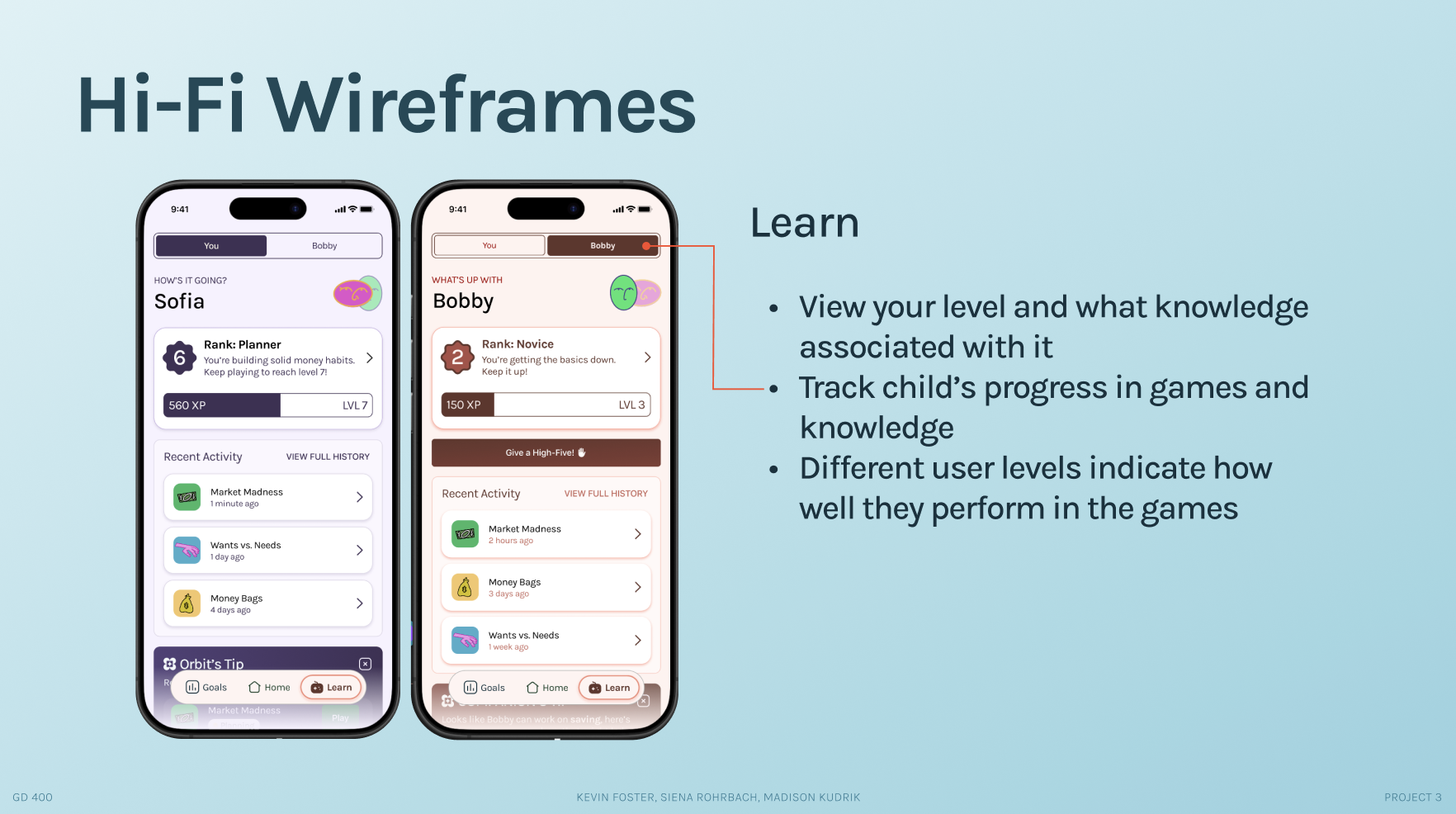
Hi-fidelity Wireframes
Hi-fidelity Prototype
Presentation
Research Graphs
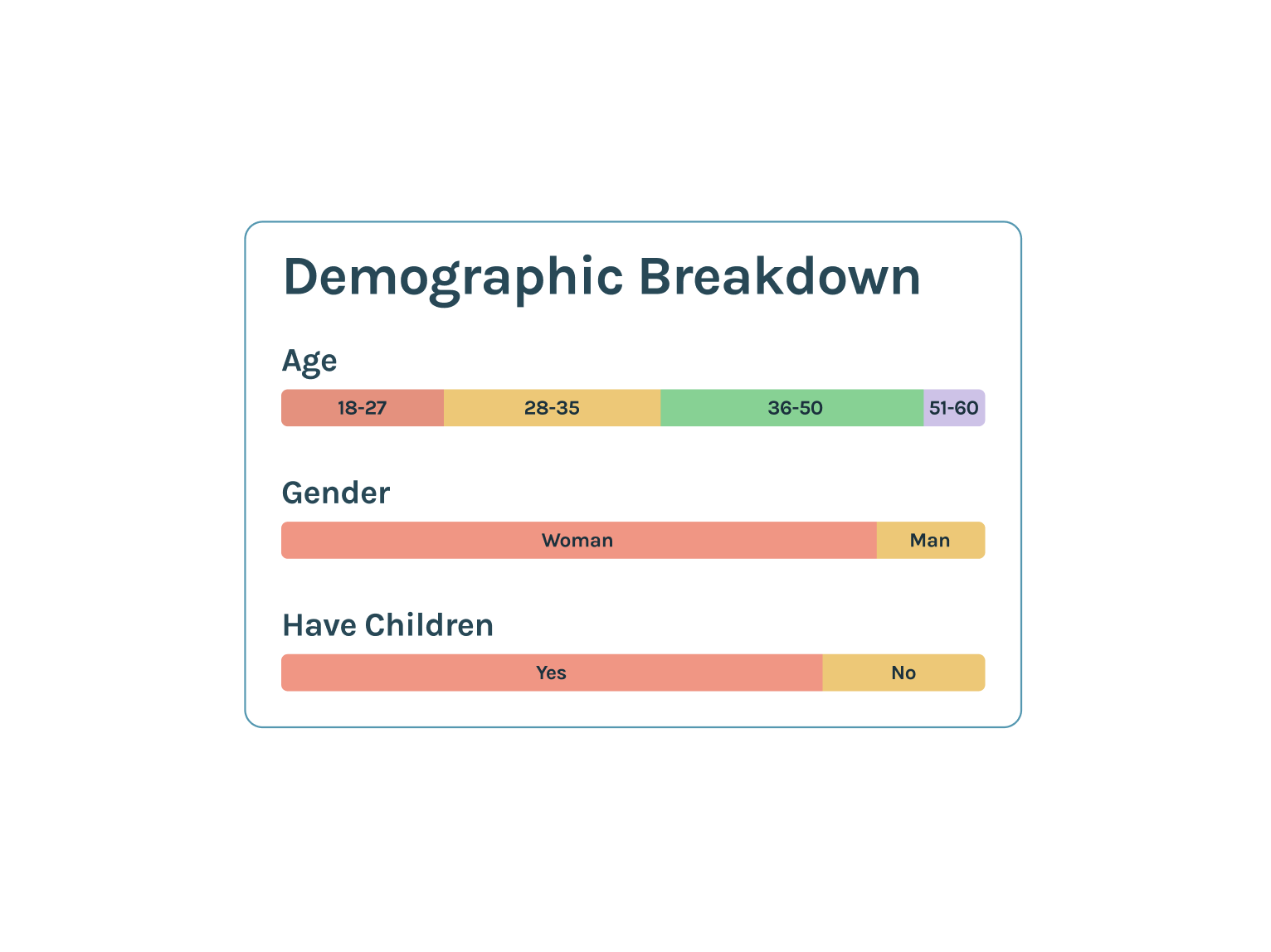
1. Exploratory Research: Understanding Target Audience and Iterating Survey Questions
Working with my team, I curated task-specific questions for inclusion in a survey that was completed by our target audience. The questions aimed to gather information about people’s approaches to finances, their associated emotions, and their ideas for improving their experiences with financial tasks. Our target audience included people working in retail, parents, and entrepreneurs.
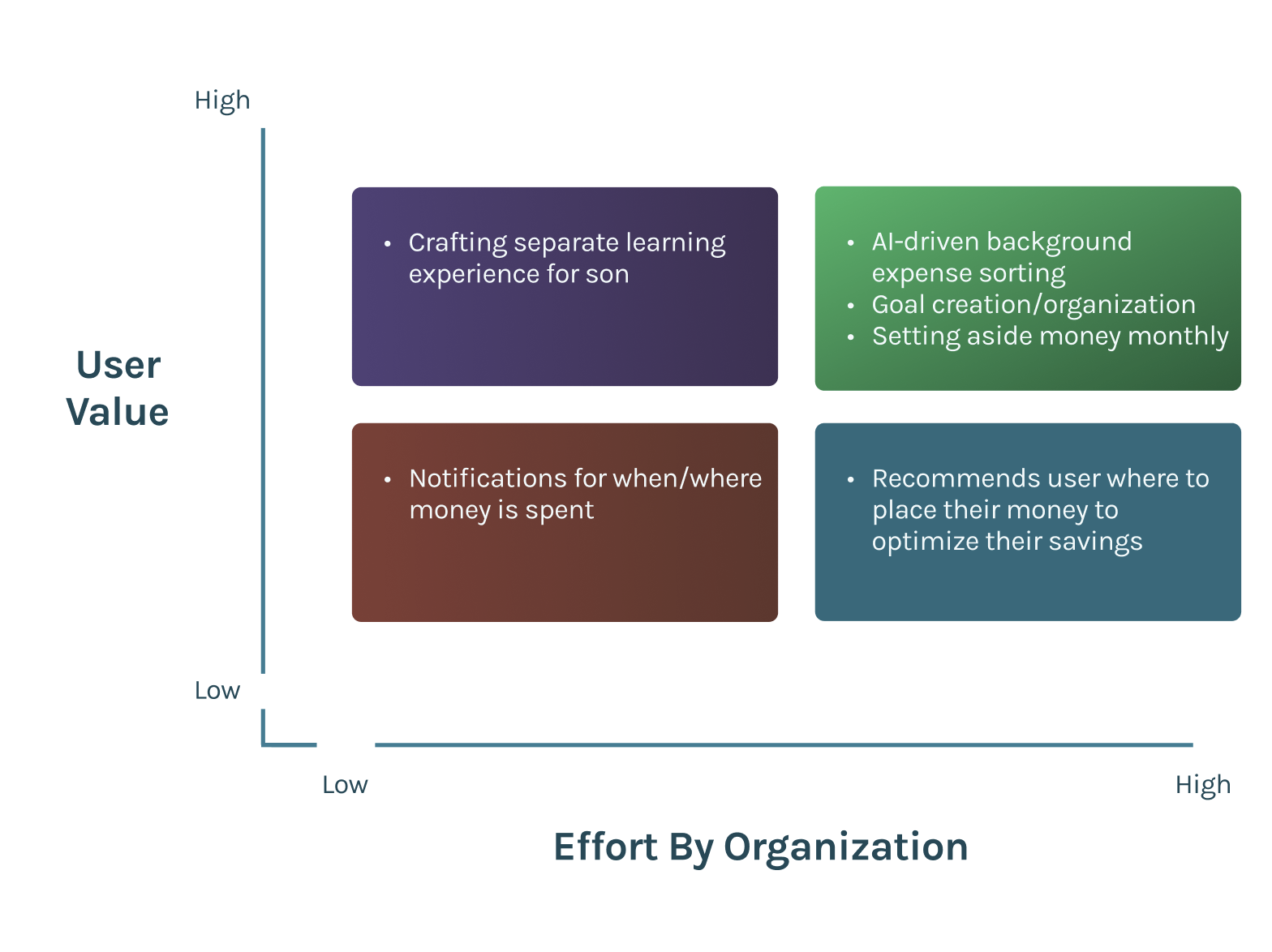
2. Secondary Research: Identifying Pinchpoints and Conducting Market Research/ Competitive Analysis
Working collaboratively with my team, I defined a user flow based on the persona’s hopes and aspirations, as well as their fears and concerns. This enabled me to identify patterns in pain points such as unexpected costs, a gap in personal finance knowledge, and trouble connecting with their child. Additionally, through the scenario-specific research we conducted, which included MSCW (Must Have, Should Have, Could Have, Won’t Have), Impact/Effort Charting, Empathy Mapping, and Satisfaction/Functionality diagramming, I learned what to focus on to produce the best results.
3. Generative Research: Establishing a User Journey Map, Emotion Map, and User Story with Specific Touchpoints
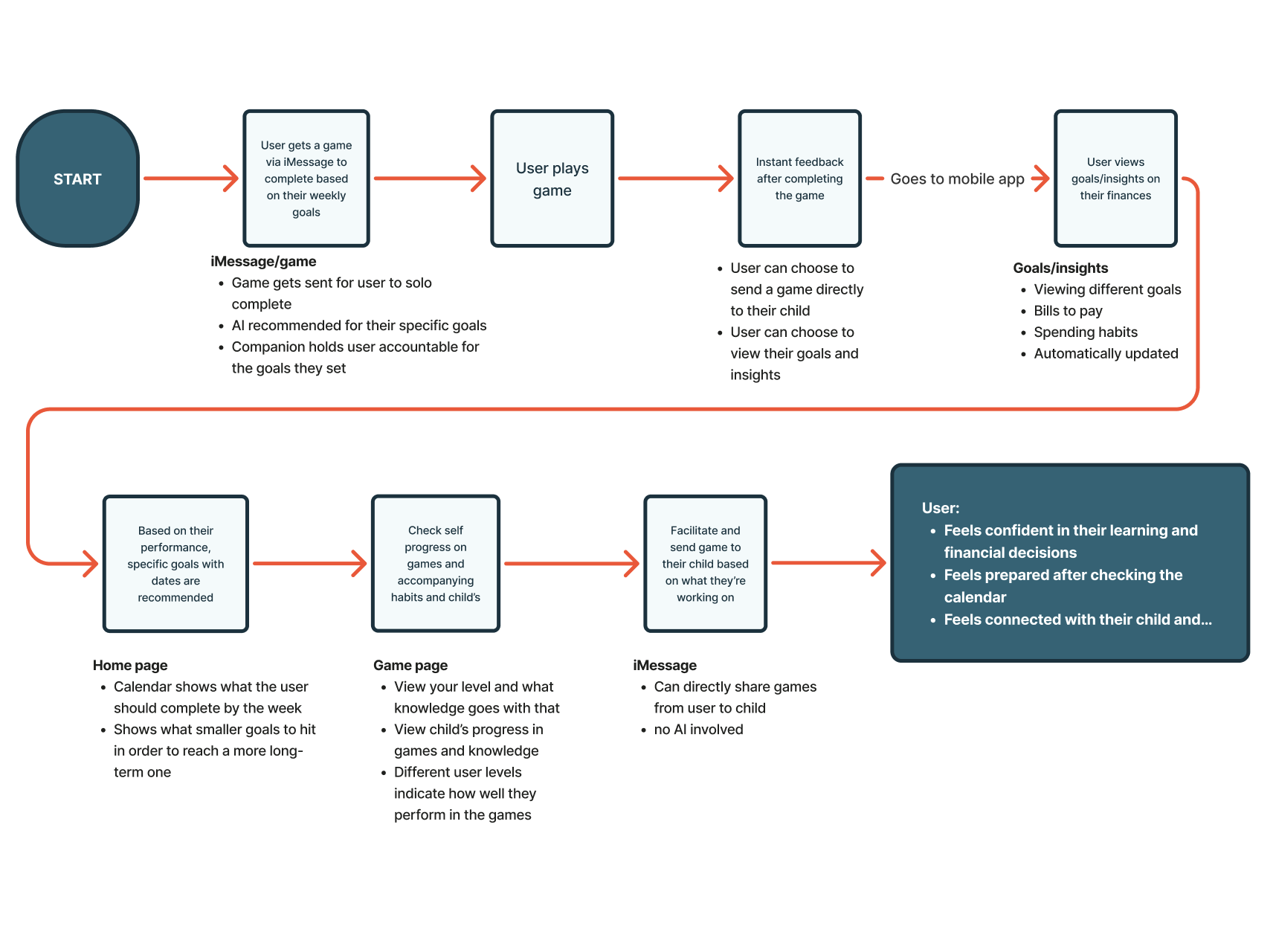
We defined a user flow based on the persona’s strengths and weaknesses, and recognized patterns in pain points.
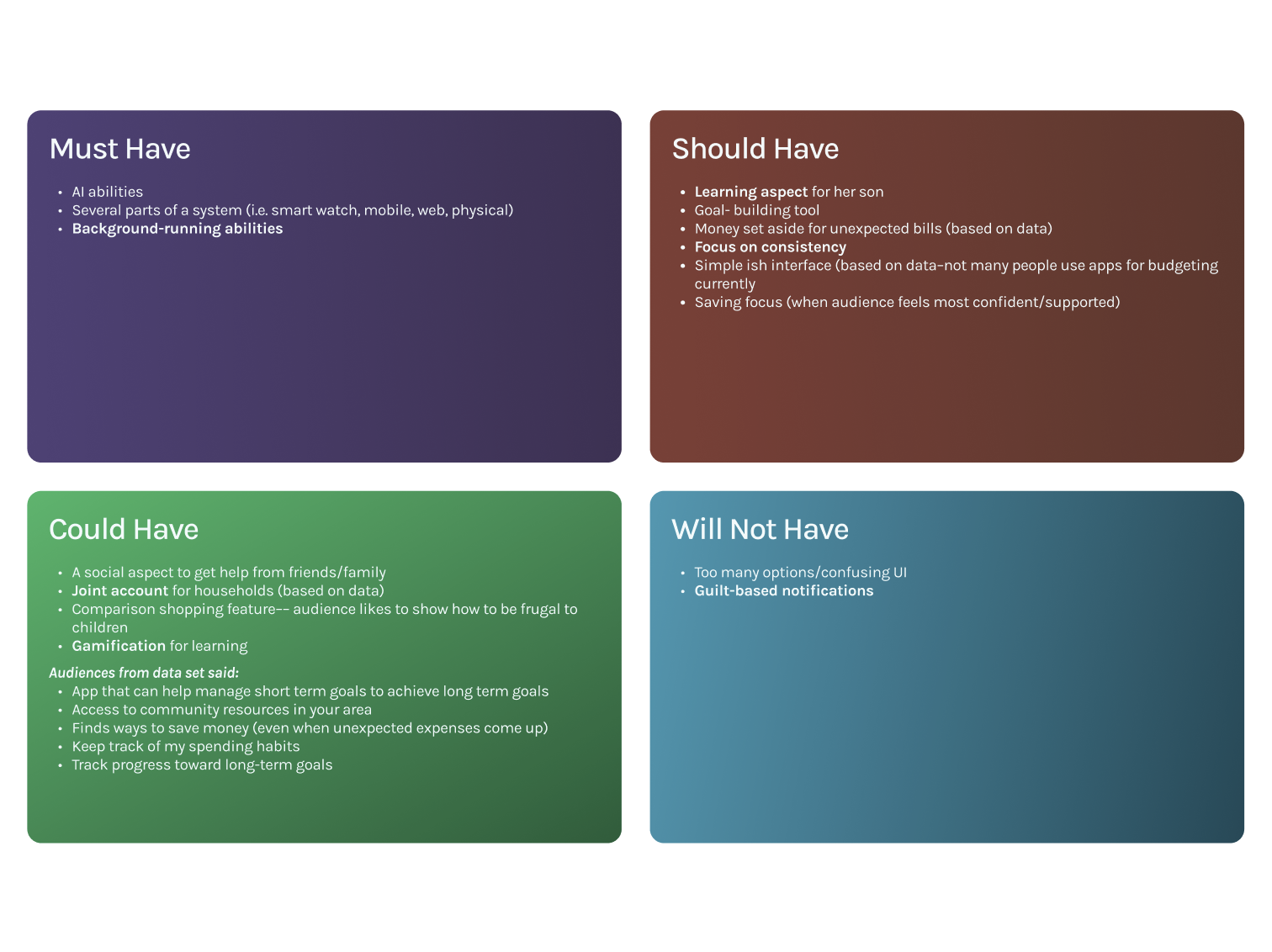
We conducted scenario-specific research, including MSCW, Impact/Effort, Empathy Mapping, and Satisfaction/Functionality.
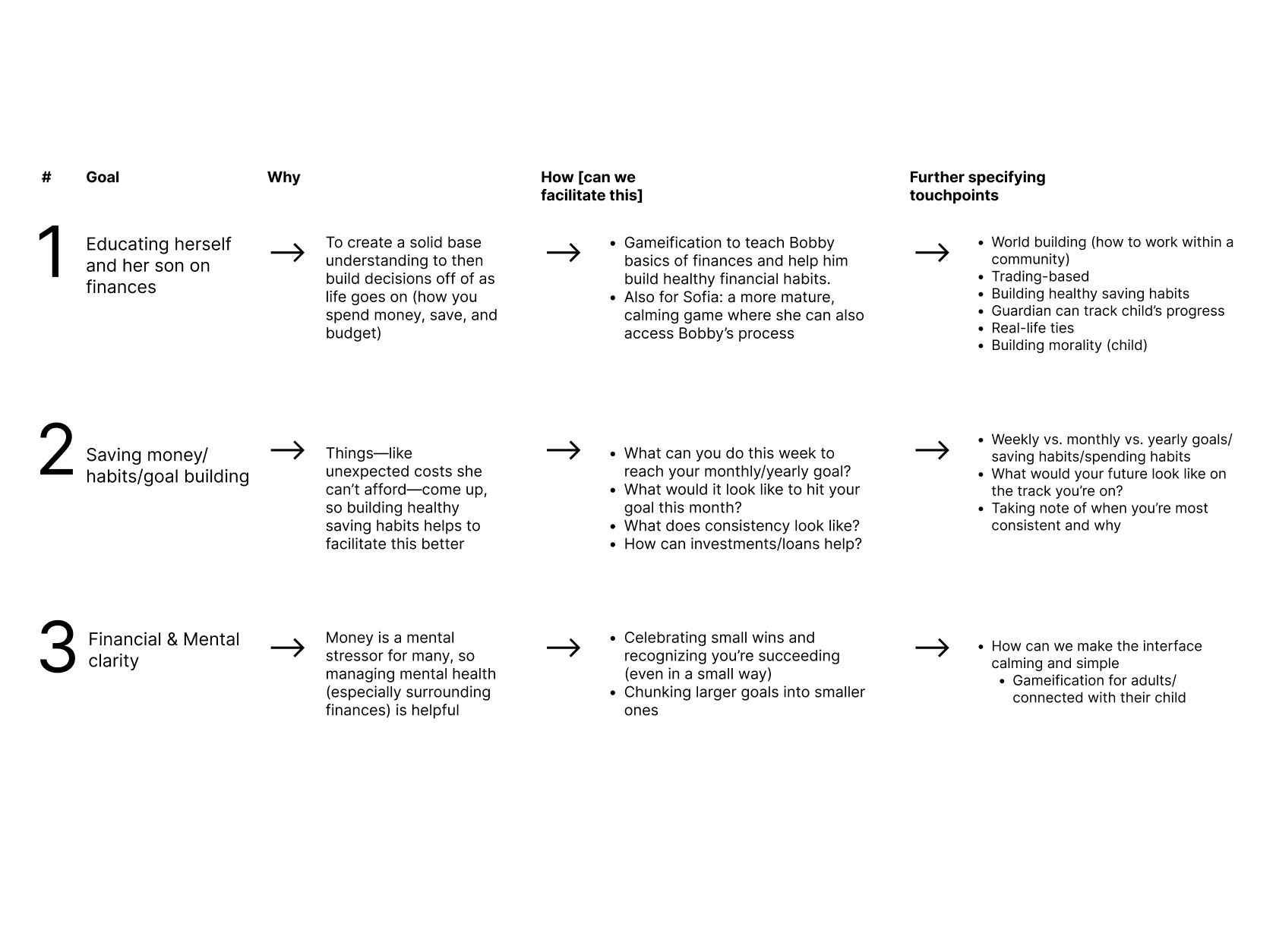
Additionally, I developed a user story with specific touchpoints to determine ways of framing the content that is perceived as authentic.
Throughout these steps, I continually aligned my work to our project mission statement, “Empowering families to build confidence and a secure financial future by turning everyday moments into engaging experiences that strengthen mental well-being and financial habits.”
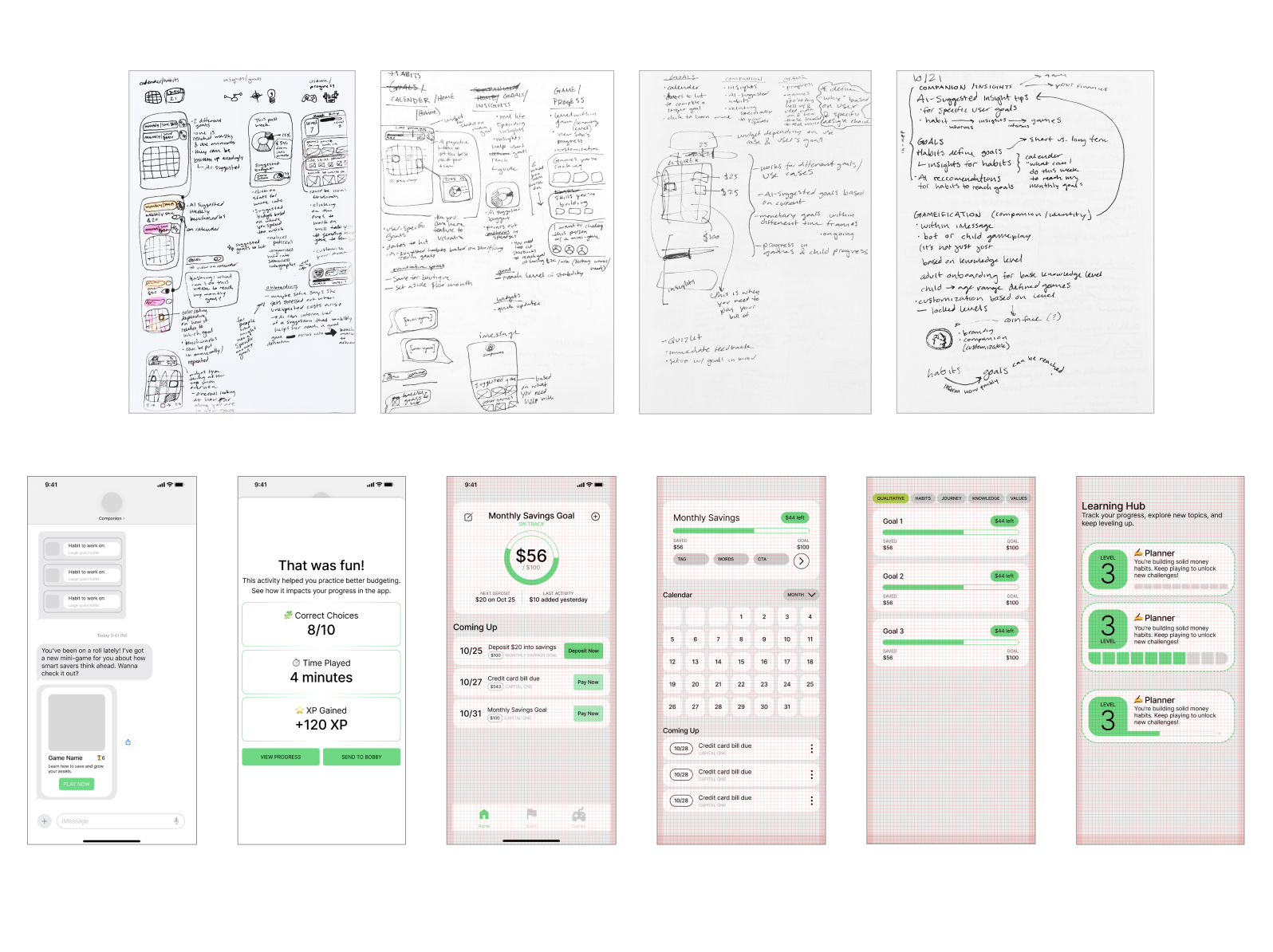
4. Protoyping: Creating Low- Hi Fidelity Wireframes
We conducted several rounds of iterations before reaching our final design. During this process, I focused specifically on the visual assets of our prototype and the development of our branding system. I gathered feedback at each step that informed the refinement of our concept. While prototyping, we focused on specific tasks users would complete, aiming to boost their confidence in learning about finances, making financial decisions, preparing and checking their calendar, and teaching their children financial literacy.
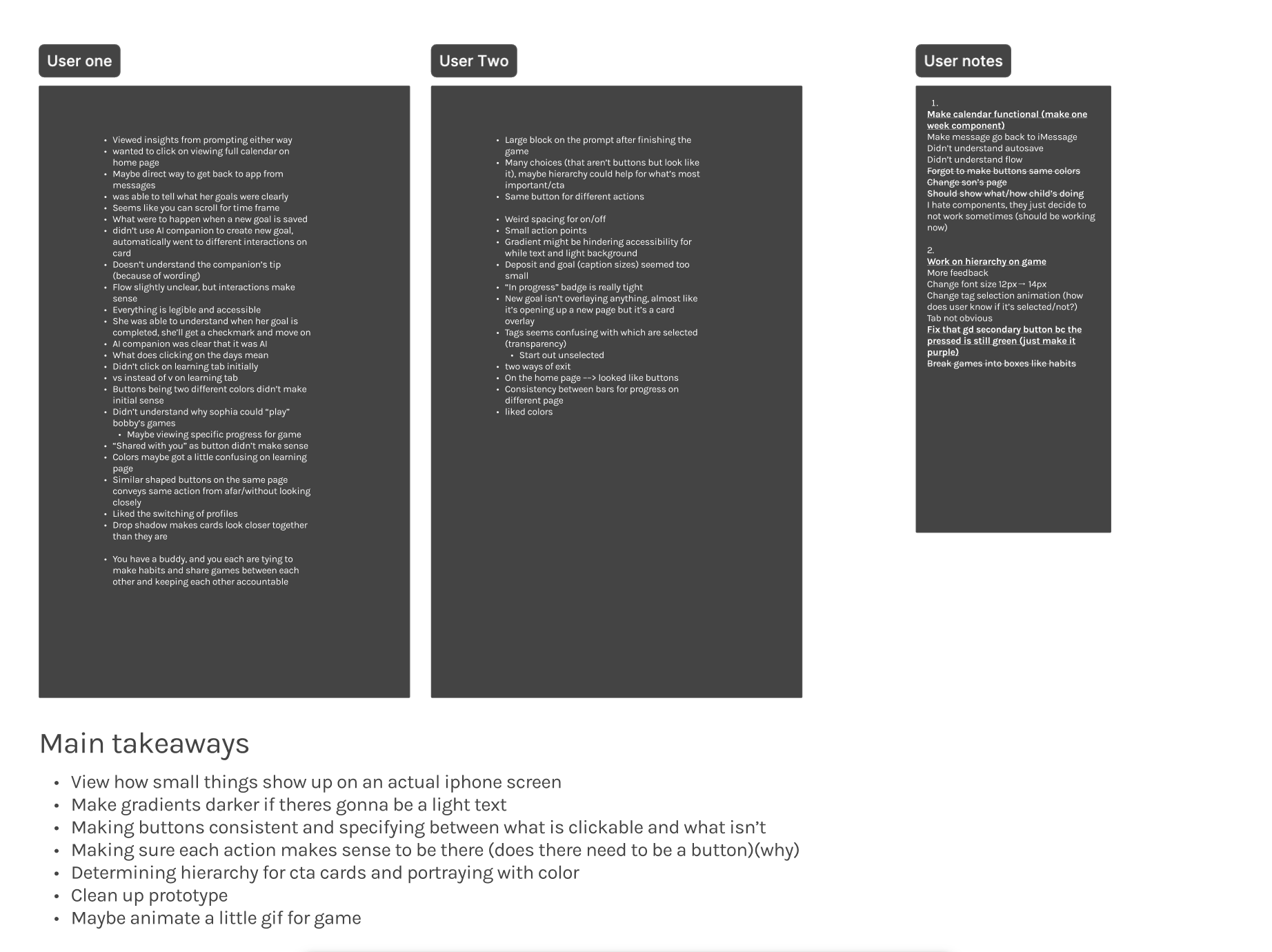
5. Evaluative Research: Evaluating, Testing Techniques, and Analyzing Insights
We conducted a few rounds of user testing, including a 5-second analysis of our mid-fi wireframes and think-aloud protocol. This process was helpful because it helped us understand what people were thinking/feeling when using the app.
Notable findings included some assets being recognized as buttons when they were not, confusing wording, and unclear task flow. However, our type scale was deemed appropriate, and the app was noted as cohesive overall.
6. Completion: Refining Design Artifacts and Presentation
When reviewing the final round of changes to our Hi-Fi wireframes and prototype, I could clearly see the positive evolution of our work. Knowing that each design decision was purposeful and recognizing the research conducted to reach that point was powerful. I also enjoyed presenting our project to classmates, and I appreciated their insightful comments.
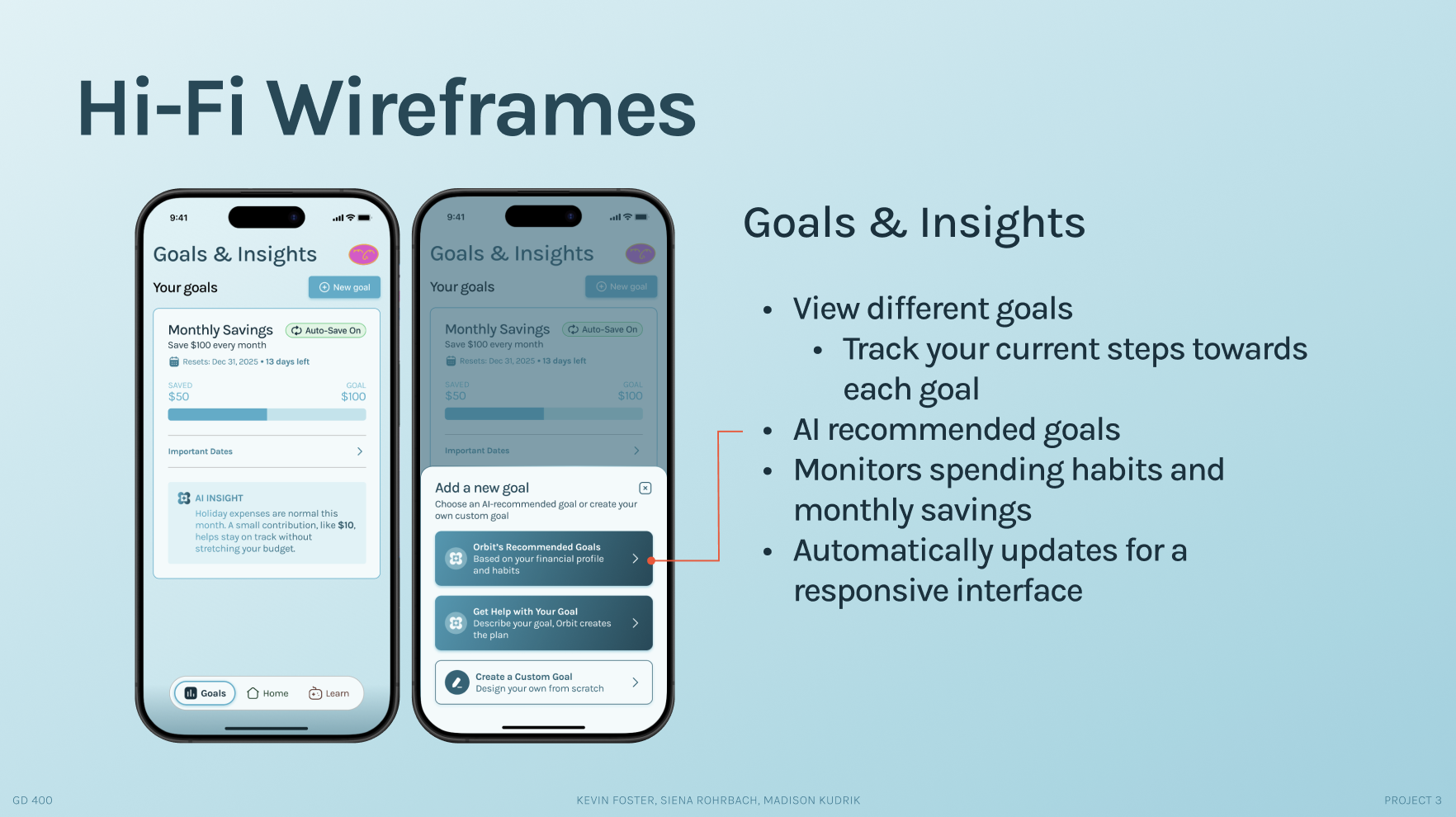
Potential Outcomes
This project has the potential to:
Illustrate ethical and responsible AI use
Guide the development of an extensive brand identity
Bridge gaps in understanding the capabilities of a wellness app
Challenges Tackled
Throughout this project, I faced challenges in understanding topical information and navigating team dynamics—both of which strengthened my learning and understanding. Having not managed extensive finances on my own, I had much to learn to assist others in the process. Approaching the problem space with curiosity and a research focus enabled me to move through each step of the project with confidence. Additionally, work distribution and communication issues arose among my team members. I am pleased that we worked through obstacles with maturity, which led us to collaboratively develop an effective outcome.
Learnings
I learned a lot throughout this project, especially about AI and ethics in human-centered design. Exploring the affordances and limitations of AI was interesting and surfaced important considerations. I also appreciated collaborating with my peers in ways that leverage our collective strengths. Lastly, I learned new research methods, including broad-to-focused methods, which guided my thoughtful, well-informed design decisions.
Next Steps
I can envision prototyping a responsive game that teaches financial literacy using my team’s research, while further integrating hand-drawn illustrations into the gameplay and branding to humanize the project and strengthen the cohesion of the experience.
Read more about my process here
 Siena Rohrbach