
While interning at SAS, I designed an informational/promotional video for Digital Sales Rooms. My goal was to help front-line SAS stakeholders understand the features of Digital Sales Rooms, or DSRs, and recognize them as beneficial to their use case. To complete the task effectively, I scripted the piece, introducing stakeholders to DSRs, describing their features, and promoting their use.
Project Timeline:
3 weeks; July 2025
Research Methods Employed
Cross-discipline collaboration
A/B Testing
Case Studies
Customer Experience Audit
Evaluative Research
Roles Played
Research Visualizer
Writer
Animator
Graphic designer
Artifacts Designed
Storyboards
Graphs
60-second promotional video
Cover Page
1. Exploratory Research: Understanding Pain Points and Design Touchpoints
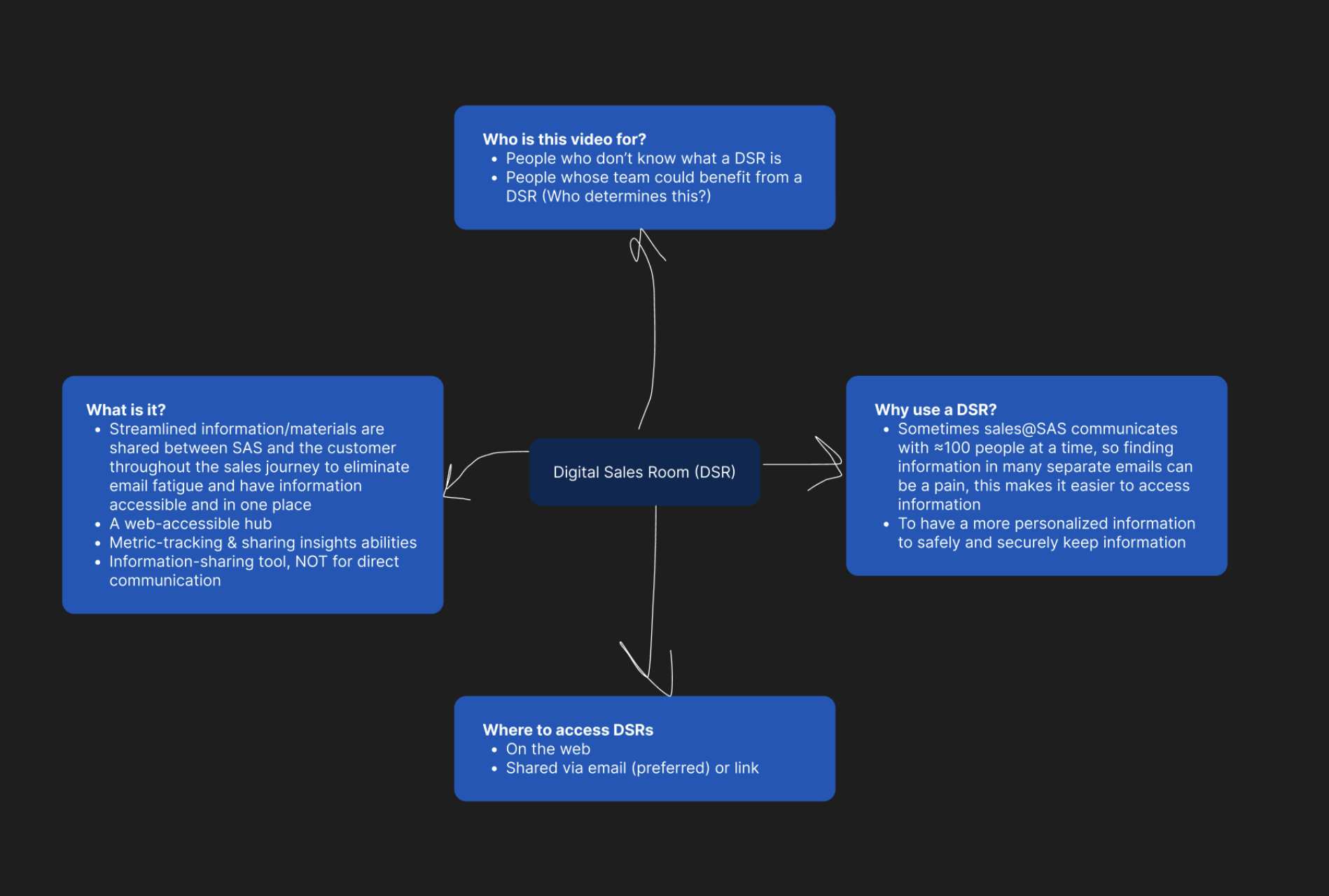
As a starting point, I researched how employees in different departments at SAS used DSRs to identify pain points and explore potential solutions. I discovered that disorganization across various communication platforms, such as email, was a common struggle for users.
With this background informationin mind, I created a descriptive script along with an accompanying animation for a promotional video. My coworker, Dave, assisted with the voiceover; he is known as “The Voice of SAS,” so he recorded my script for the video.
2. Secondary Research: Conducting Competitive Analysis and Gathering Inspiration
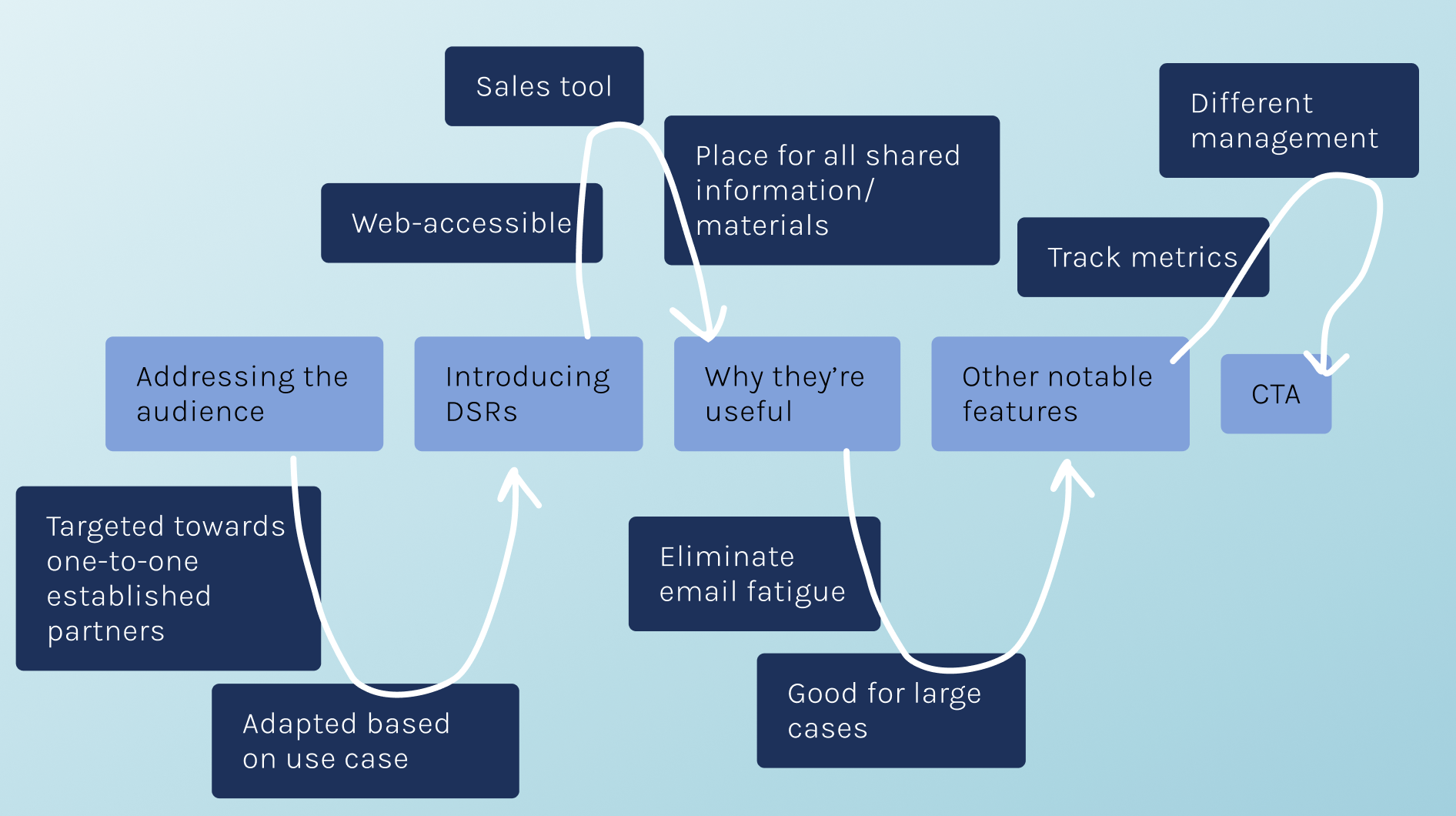
I researched animated informational videos, including TED-Ed animations, video essays, and documentaries. I discovered that users often struggle to engage with video messaging and may not fully understand the purpose and function of Digital Sales Rooms. To address these issues, I explored various storytelling techniques to keep viewers interested while delivering essential information. As a result, I developed a narrative to explain the use of Digital Sales Rooms and created a user journey that outlines the animation, voiceover, and information flow.
3. Generative Research:
Developing Personas, Establishing a User Journey Map, and Creating a User Story with Specific Touchpoints
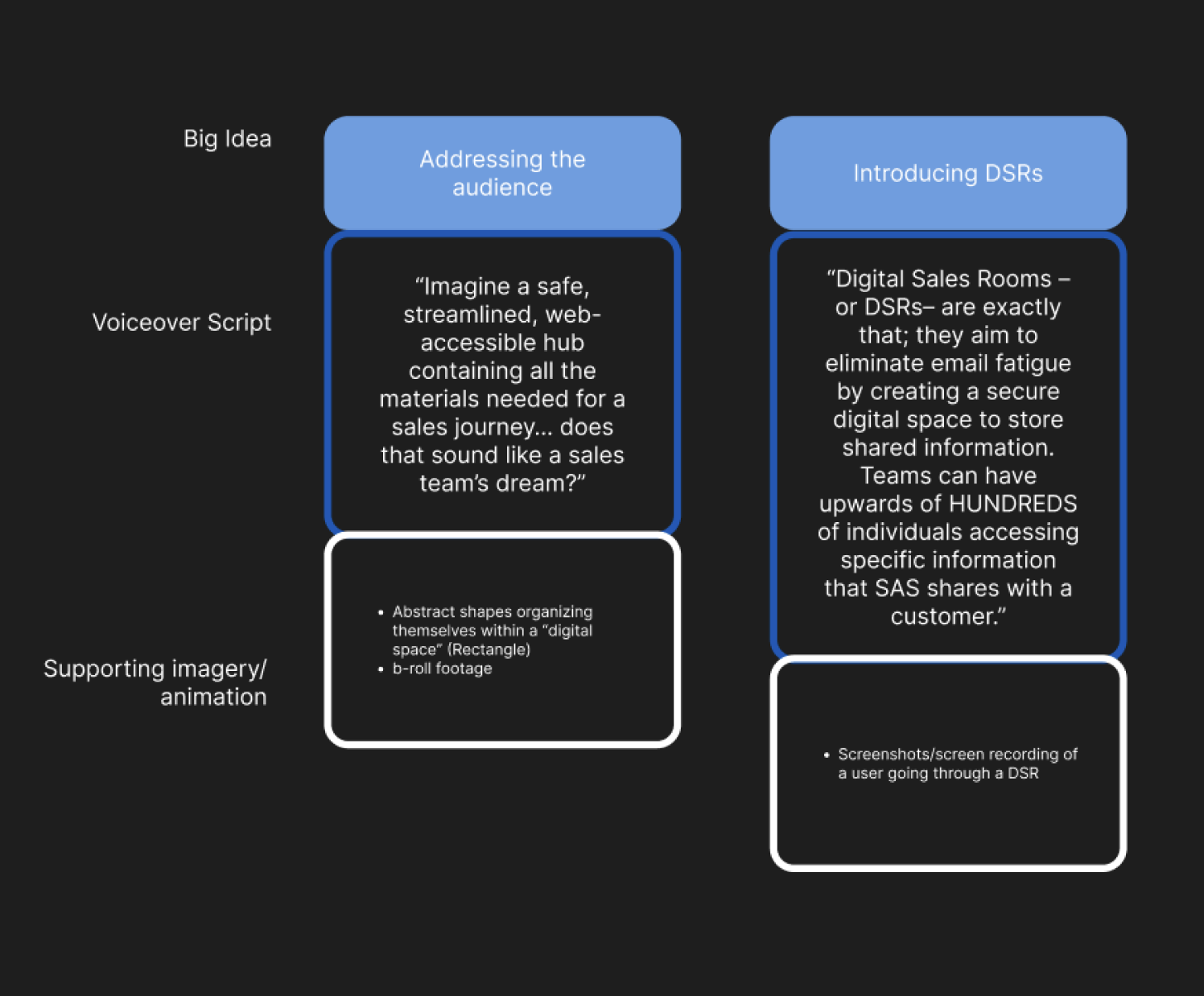
To ensure the video met its goals, I researched the audience’s pain points with input from coworkers experienced with DSRs, learning how to effectively visualize a tool for a specific audience.
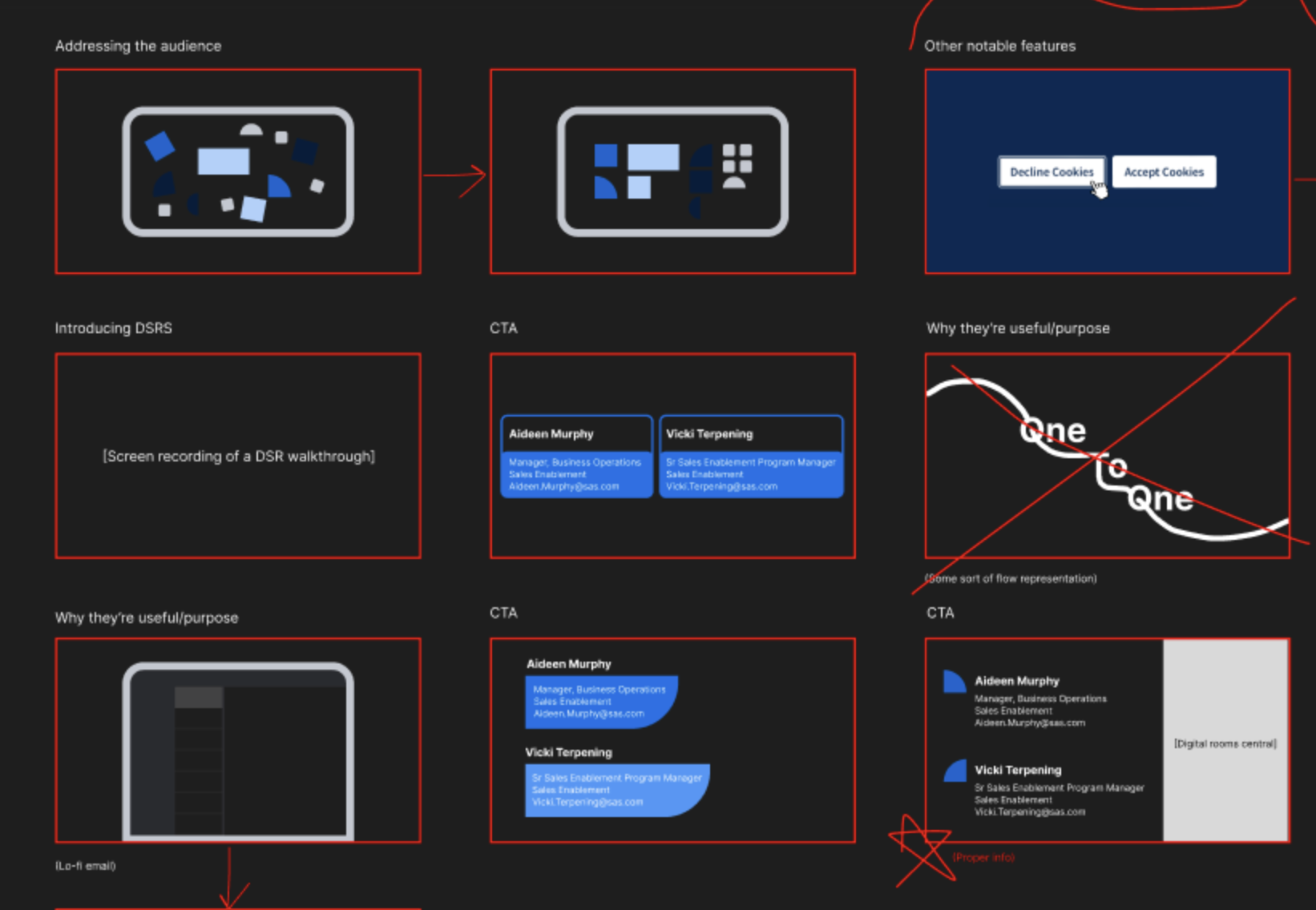
I created an animation to illustrate how these pain points are addressed with Digital Sales Rooms. Based on these insights, I developed a user journey map that guided my visualization of key points in the informational video.
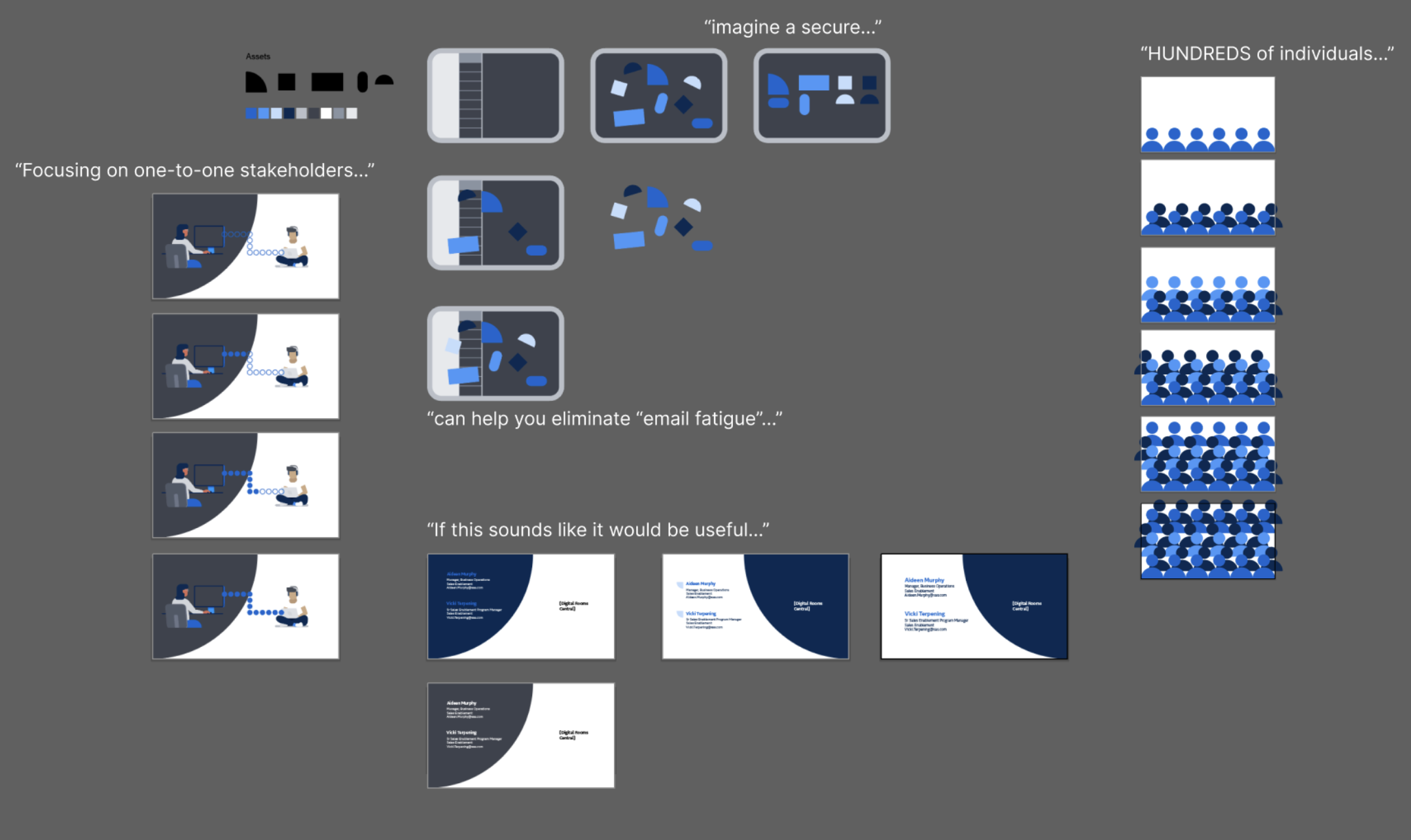
Additionally, I wrote and aligned a script for the piece and crafted supporting visuals, paying close attention to how I combined visuals, sound, and motion to tell a comprehensive and compelling story.
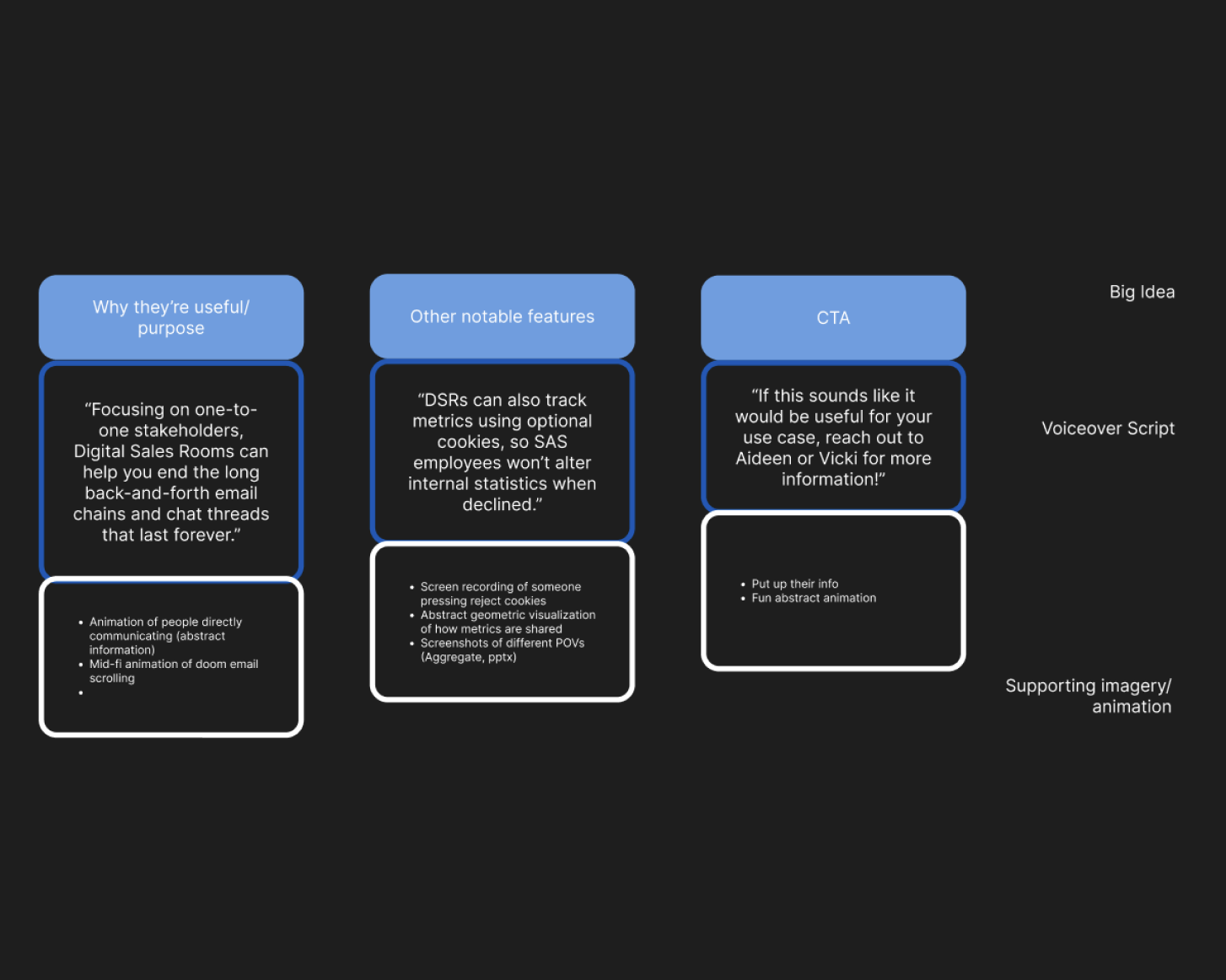
4. Protoyping:
Creating a Script and Key Scenes
To ensure that my messaging was effective, I iterated on the script several times. Once it was refined, I grouped the content into frames and visualizations, which enabled me to define key scenes. I then designed graphics to align with those groups. At this stage, I shared my work with several different people, gaining various perspectives. Their feedback helped me refine the informational video through multiple iterations.
5. Evaluative Research:
Analyzing the Information Provided to Me
I tested my design with those who would be using it, and took note of what was unclear to them or visually confusing. I specifically observed people’s expressions while they watched the video. The changes I made to my design were based on the findings I gained from this research.

6. Completion:
Refining Design Artifacts
Once I had completed the video components, I gave the script and the animation prototype to the narration specialist at SAS for recording. The finished informational video was then shared with the Sales Enablement team for use on internal customer-facing pages.
Stills from the Information Video:




Potential Outcomes
Given its robust system structure, this project has the potential to:
Guide people in the making of digital sales rooms.
Engage people in learning about digital sales rooms.
Provide information on when digital sales rooms can be useful.
Challenges Tackled
This project challenged me to design an animation and an interesting script to engage and inform audiences in DSRs. I focused on creating materials that effectively communicated complex systems, aligning with my interests and expertise. Additionally, I explored research methods to gather psychological insights that informed my design decisions, enhancing the overall effectiveness of the project.
Learnings
Through this project, I learned to work effectively with people in different disciplines, constantly iterating to improve the outcome of my designs. I also gained a great deal from interacting with my target audience, as they provided insight into their wants and needs in an explanatory video.
Next Steps
I am excited to apply the new design processes that I learned from this project to the design and animation of time-based work in the future!
Please read more about my process here.
 Siena Rohrbach